




























1. Introduction: The Importance of Data Privacy in the Modern Business Landscape
1.1 The Growing Need for Data Privacy
Data privacy has become one of the most critical concerns in today’s interconnected world. As businesses gather vast amounts of personal, financial, and operational data, the risk of exposing sensitive information increases exponentially. Data breaches, hacking incidents, and unauthorized access to private data have not only led to financial losses but also eroded consumer trust in organizations.
In industries such as healthcare, finance, and e-commerce, where highly sensitive personal data is routinely exchanged, ensuring the privacy of such data is non-negotiable. Regulations such as the General Data Protection Regulation (GDPR) in the European Union and the California Consumer Privacy Act (CCPA) have set high standards for data privacy, making it essential for businesses to adopt robust security mechanisms.
1.2 How Blockchain Can Help Protect Data Privacy
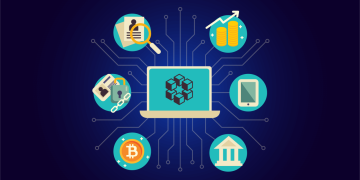
Blockchain technology offers a solution to the growing need for data privacy protection. By leveraging decentralization, cryptography, immutability, and distributed consensus, blockchain can provide enhanced security for sensitive information, reduce the risk of data tampering, and ensure that data access is both transparent and controlled. Enterprise blockchain, in particular, has the potential to reshape the way businesses manage and protect user data, offering a more secure alternative to traditional centralized data storage systems.
This article explores how enterprise blockchain improves data privacy through its architecture, security protocols, and real-world use cases, as well as the challenges it faces in implementing and scaling.
2. How Blockchain Enhances Data Privacy: A Deep Dive
2.1 The Role of Decentralization in Data Privacy
Traditional data management systems are often centralized, meaning data is stored in a single location, controlled by a single entity. This centralization creates a single point of failure, making it vulnerable to hacking and unauthorized access.
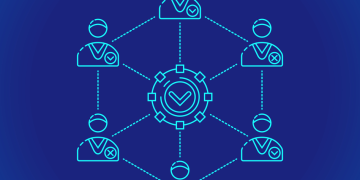
Enterprise blockchain operates on a decentralized model, where data is stored across multiple nodes in a network. This architecture offers several key advantages for data privacy:
- Distributed Control: Data is not controlled by a single entity, reducing the likelihood of unauthorized access. Even if one node is compromised, the data remains secure on other nodes.
- Resilience Against Attacks: A decentralized network is more resilient to cyberattacks, as it eliminates the risk of a single server being targeted by hackers.
- No Centralized Data Repository: With no centralized database, blockchain reduces the risk of a massive data breach, as there is no large, single-point-of-failure for attackers to target.
2.2 Immutability: Ensuring Data Integrity and Trust
Once data is recorded on a blockchain, it cannot be altered or deleted without the consensus of the network participants. This immutability feature is crucial for protecting data privacy:
- Protection Against Data Tampering: Since each transaction is cryptographically linked to the next one, modifying any data on the blockchain would require altering all subsequent blocks, an effort that is computationally infeasible.
- Data Provenance: Blockchain enables businesses to track the history of data, providing full audit trails of data changes. This is critical in industries like healthcare, where tracking the integrity of patient records is essential.
- Transparent Transactions: Although data on the blockchain is transparent and auditable, sensitive information is protected through encryption, allowing organizations to prove the integrity of data without exposing private details.
2.3 Encryption and Cryptography: Securing Sensitive Data
Blockchain uses advanced cryptographic algorithms to protect data from unauthorized access. This includes:
- Public and Private Keys: Blockchain networks utilize public and private keys to control access to data. A private key is used to sign transactions, and only the holder of the private key can access or alter the associated data.
- Data Encryption: Blockchain can employ advanced encryption methods, ensuring that sensitive information stored on the ledger is unreadable to anyone without the decryption keys. This ensures that even if the blockchain is accessed by malicious actors, the data remains protected.
- Zero-Knowledge Proofs (ZKPs): ZKPs allow one party to prove to another party that a statement is true without revealing the underlying data. This is particularly useful for maintaining privacy while verifying transactions, without disclosing the specifics of the data involved.
3. Real-World Use Cases: Blockchain Protecting Data Privacy in Enterprises
3.1 Healthcare: Protecting Patient Privacy
The healthcare industry handles vast amounts of sensitive personal information, including medical histories, prescriptions, and treatment records. Blockchain’s ability to offer secure, immutable, and encrypted data storage makes it a powerful tool for protecting patient privacy.
- Secure Patient Data Management: Blockchain can provide a secure and decentralized system for storing patient records, ensuring that only authorized individuals, such as doctors and healthcare providers, have access to the data. This reduces the risk of unauthorized access and minimizes the chances of data breaches.
- Data Portability: Blockchain can also enable patients to own and control their health data, making it portable across different healthcare providers. This empowers patients and enhances their ability to manage their health information.
- Audit Trails: With blockchain, every access to a patient’s data is logged and timestamped, providing an immutable audit trail. This transparency helps ensure that the data is only accessed by authorized parties.
3.2 Financial Services: Protecting Transaction Privacy
The financial sector is one of the most heavily regulated industries in terms of data privacy. Financial institutions store vast amounts of personal and financial data, making them prime targets for hackers.
Blockchain offers enhanced privacy protection through:
- Secure Payments and Transactions: Blockchain allows for the creation of private payment channels and secure digital identities, ensuring that sensitive transaction details are encrypted and protected from unauthorized parties.
- Decentralized Identity Management: Blockchain-based identity systems, such as self-sovereign identities (SSIs), allow users to control their digital identities and grant access to specific information on a need-to-know basis.
- Compliance with Regulations: Blockchain can help financial institutions comply with data privacy regulations such as the GDPR by enabling users to control access to their data while ensuring transparency and accountability in financial transactions.
3.3 Supply Chain Management: Securing Product Data
In the supply chain industry, data privacy and transparency are crucial. Blockchain can enhance data privacy while ensuring that only authorized participants can access supply chain information, such as product origins, manufacturing details, and shipping status.
- Secure Data Sharing: Blockchain allows stakeholders to securely share data related to product provenance without exposing sensitive business information to unauthorized parties.
- Preventing Fraud and Counterfeiting: The immutability of blockchain ensures that once data is recorded, it cannot be altered. This protects against fraud and counterfeit goods entering the supply chain.
4. Challenges in Implementing Blockchain for Data Privacy Protection
4.1 Scalability Issues
Blockchain technology, especially in public networks, can face scalability issues. The more data that is stored, the larger the blockchain grows, which can slow down transaction speeds and increase costs.
To address scalability, solutions such as Layer-2 solutions, sharding, and off-chain storage are being explored, but these solutions still face challenges related to efficiency and adoption.
4.2 Regulatory and Legal Concerns
While blockchain offers enhanced privacy, its decentralized nature raises concerns about compliance with data protection regulations. For example, the GDPR includes a “right to be forgotten,” which conflicts with blockchain’s immutability. Addressing these regulatory challenges will be key to mainstream blockchain adoption in data-sensitive industries.
4.3 Integration with Legacy Systems
Many enterprises still rely on legacy systems that are not compatible with blockchain. Integrating blockchain technology into existing IT infrastructures requires significant investment and expertise. Additionally, businesses need to navigate interoperability issues between blockchain and traditional systems.
5. The Future of Blockchain in Data Privacy Protection
5.1 Improved Privacy Solutions with Zero-Knowledge Proofs
The future of blockchain and data privacy lies in enhancing privacy-preserving features like Zero-Knowledge Proofs (ZKPs) and Homomorphic Encryption. These solutions will allow organizations to verify data and transactions without revealing sensitive information.
5.2 Blockchain and AI for Privacy Protection
Combining blockchain with artificial intelligence (AI) could lead to the development of more sophisticated systems that can detect data breaches in real-time, analyze patterns for potential threats, and offer more secure data-sharing frameworks.
5.3 Widespread Adoption and Standardization
As blockchain technology continues to mature, industries will need to adopt common standards for data privacy and security. The adoption of blockchain for data privacy will likely become more widespread across healthcare, finance, and supply chain sectors as regulatory frameworks evolve.
6. Conclusion
Enterprise blockchain is a game-changer in the effort to protect data privacy. By offering a decentralized, secure, and immutable framework for managing sensitive data, blockchain provides organizations with the tools needed to safeguard personal, financial, and operational information. While challenges remain in terms of scalability, regulation, and integration, the potential for blockchain to transform how businesses protect and manage data is immense. As the technology evolves, it will play an increasingly critical role in ensuring that data privacy is upheld across industries.