


























Introduction
In today’s fast-paced global economy, businesses must find innovative solutions to meet the increasing demands for efficiency, visibility, and real-time decision-making in their operations. Supply chain management (SCM) plays a critical role in ensuring that products are delivered on time, at the right cost, and with the appropriate level of quality. However, traditional supply chain systems, which rely on manual processes and fragmented technologies, often struggle to meet these requirements.
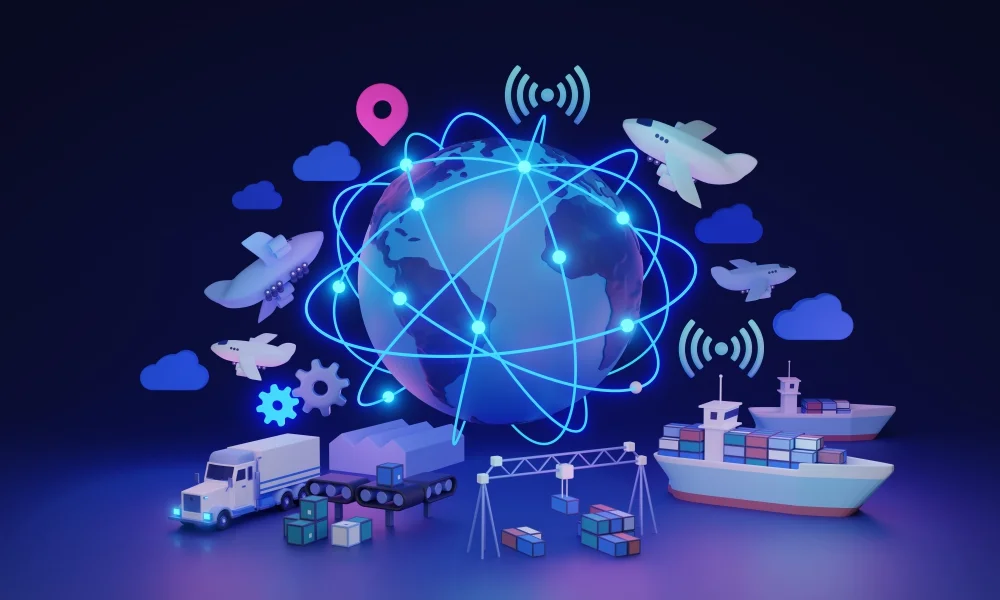
The Internet of Things (IoT) has emerged as a powerful tool to transform supply chains by enabling real-time data collection, enhanced visibility, and automation. IoT refers to the network of physical devices, vehicles, sensors, and other connected objects that communicate data over the internet. In the context of supply chain management, IoT devices such as RFID tags, GPS trackers, sensors, and smart devices can capture critical information about goods in transit, warehouse operations, and inventory levels, offering unprecedented insight into every aspect of the supply chain.
This article will explore how the integration of IoT into supply chain management can enhance operational efficiency, improve decision-making, increase transparency, and reduce costs. We will also examine the challenges associated with implementing IoT in supply chains and discuss the future of IoT-enabled supply chains in a rapidly evolving technological landscape.
The Role of IoT in Supply Chain Management
The integration of IoT into supply chain management is not a mere technological upgrade but rather a complete transformation of how businesses manage their operations, improve their service levels, and create value for their customers. IoT allows for smart logistics, real-time tracking, predictive analytics, and enhanced automation, making supply chains more responsive, resilient, and adaptable.
1. Real-Time Visibility and Tracking
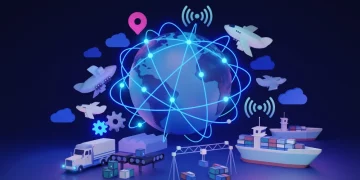
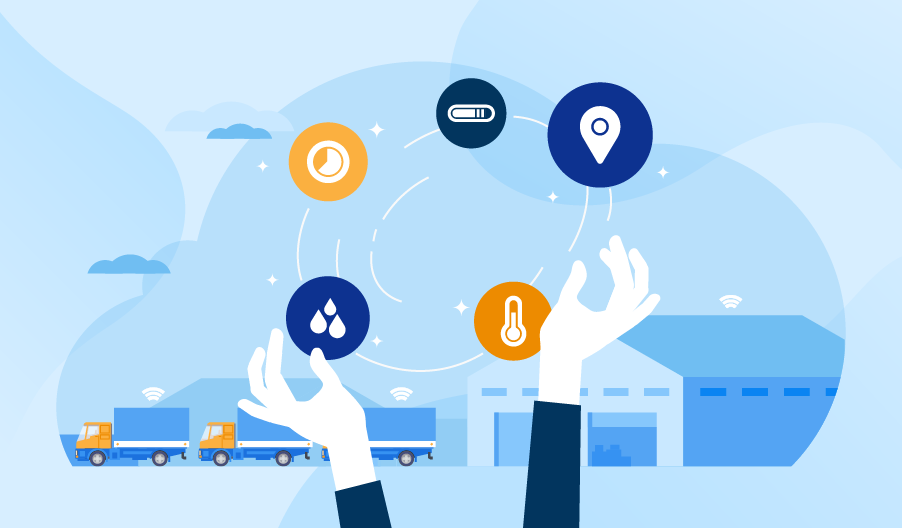
One of the most significant contributions of IoT to supply chain management is the ability to provide real-time visibility. Traditionally, businesses had limited visibility into the status of their goods as they moved through the supply chain. With IoT-enabled devices, such as GPS trackers, RFID tags, and sensors, companies can now track the precise location and condition of products at every stage of the supply chain.
For example, in the transportation and logistics sector, companies can track shipments in real-time, monitor delivery routes, and ensure that goods are being transported under optimal conditions. This real-time data allows supply chain managers to identify potential delays, address issues proactively, and provide customers with more accurate delivery times. This level of transparency improves trust with customers and partners and enhances overall operational efficiency.
2. Inventory Management and Automation
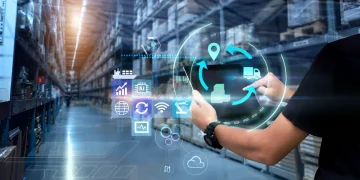
Effective inventory management is critical for maintaining a smooth supply chain. IoT plays a vital role in automating inventory control by enabling smart warehouses and inventory tracking systems. Sensors embedded in products or pallets can provide real-time data on stock levels, enabling businesses to monitor inventory more effectively. This real-time monitoring helps companies avoid stockouts, reduce excess inventory, and optimize their storage capacity.
IoT can also automate various inventory processes, such as order picking, sorting, and replenishment. For instance, when inventory levels fall below a predefined threshold, IoT-enabled systems can automatically trigger reorder notifications, minimizing human intervention and reducing the chances of human error. Automated guided vehicles (AGVs) and drones equipped with IoT sensors can assist in material handling and inventory retrieval within warehouses, further enhancing efficiency.
3. Predictive Analytics for Demand Forecasting
IoT devices, when integrated with artificial intelligence (AI) and machine learning algorithms, can provide advanced predictive analytics that helps businesses forecast demand more accurately. By continuously collecting data on product sales, customer behavior, and external factors (such as weather patterns, economic trends, and market shifts), IoT-enabled systems can predict future demand with greater precision.
This predictive capability allows businesses to adjust production schedules, procurement plans, and inventory levels in advance, ensuring that they can meet demand fluctuations without overstocking or understocking. Predictive analytics also helps companies identify potential disruptions or delays in the supply chain before they occur, enabling them to take proactive measures to mitigate risk.
4. Enhanced Security and Condition Monitoring
The integration of IoT technologies into supply chains can also enhance security and condition monitoring for goods in transit. Smart sensors can be used to monitor the condition of perishable or sensitive goods, such as food, pharmaceuticals, and electronics, ensuring that they are stored and transported under the right conditions. For example, temperature and humidity sensors can alert supply chain managers if goods are exposed to unfavorable conditions, preventing damage and reducing the risk of spoilage.
In addition to monitoring product conditions, IoT devices can improve the security of goods in transit. GPS trackers and smart locks provide an added layer of security by ensuring that goods are not tampered with or stolen during transportation. This is particularly important for high-value or sensitive shipments, where real-time alerts and geofencing capabilities can reduce the risk of theft or diversion.
Benefits of Integrating IoT into Supply Chains
The integration of IoT into supply chain management offers several key benefits that can significantly improve efficiency, reduce costs, and increase customer satisfaction. Some of the most notable advantages include:
1. Cost Reduction and Operational Efficiency
By automating inventory management, improving demand forecasting, and enhancing visibility into supply chain operations, IoT can help businesses reduce costs in several areas:
- Reduced Inventory Costs: Real-time tracking and automated inventory management ensure that businesses maintain optimal stock levels, minimizing the costs associated with overstocking or stockouts.
- Improved Transportation Efficiency: IoT-enabled fleet management allows for real-time route optimization, reducing fuel consumption and transportation costs. Additionally, companies can monitor vehicle conditions to perform preventive maintenance, reducing the likelihood of breakdowns and costly repairs.
- Reduced Waste: Condition-monitoring sensors help prevent spoilage or damage to goods, particularly in industries like food, pharmaceuticals, and chemicals. This reduces the amount of waste and loss in the supply chain, resulting in cost savings.
2. Improved Customer Experience
IoT enables businesses to offer better customer experiences by providing more accurate delivery times, proactive notifications about order status, and real-time tracking information. This level of transparency not only builds trust with customers but also allows businesses to respond quickly to any issues or delays, improving customer satisfaction.
Moreover, IoT-enabled supply chains can offer personalized experiences by providing customers with more tailored products or services based on their preferences and behavior. For example, IoT-enabled systems can gather data on a customer’s purchasing habits and recommend products or services that align with their interests, creating a more customized shopping experience.
3. Supply Chain Resilience and Risk Mitigation
In an increasingly volatile world, businesses need supply chains that are resilient and adaptable. IoT enables companies to monitor supply chain conditions in real-time and respond quickly to disruptions. For example, if there is a traffic jam on a delivery route, IoT-enabled systems can automatically re-route shipments to avoid delays.
Additionally, IoT can help businesses identify potential risks in the supply chain, such as delays in raw material delivery or disruptions due to political or economic factors. With this data, businesses can create contingency plans, identify alternative suppliers, and adjust their operations to minimize the impact of disruptions.
4. Sustainability and Environmental Impact
IoT-enabled supply chains can contribute to sustainability efforts by reducing energy consumption, waste, and carbon emissions. For example, real-time data on vehicle usage and route optimization can reduce fuel consumption, while condition-monitoring sensors can help prevent spoilage, reducing food waste.
Moreover, businesses can use IoT to track the environmental impact of their supply chain operations. IoT-enabled sensors can measure energy usage, water consumption, and waste generation, providing data that can be used to improve sustainability practices and minimize environmental footprints.
Challenges in Implementing IoT in Supply Chains
Despite the numerous benefits, integrating IoT into supply chain operations comes with its own set of challenges. These include:
1. Data Overload and Integration Issues
The massive volume of data generated by IoT devices can overwhelm supply chain managers and decision-makers if not properly managed and analyzed. Businesses must invest in sophisticated data analytics platforms to process and make sense of this data.
Moreover, integrating IoT with existing supply chain systems can be complex, as many organizations still rely on legacy technologies that are not designed to work with IoT-enabled solutions. Companies may need to overhaul their IT infrastructure or adopt new platforms that can handle the influx of data from IoT devices.
2. Security and Privacy Concerns
The more connected the supply chain, the greater the risk of cyberattacks. IoT devices, particularly those that transmit sensitive data, are vulnerable to hacking and data breaches. Supply chain managers must ensure that robust cybersecurity measures are in place to protect both the physical and digital aspects of their operations.
Additionally, the use of IoT devices raises privacy concerns, especially when collecting data on customers and suppliers. Companies must comply with data protection regulations and ensure that they have the necessary safeguards in place to protect personal and sensitive information.
3. High Initial Investment
Implementing IoT solutions in the supply chain requires significant upfront investment. This includes the cost of purchasing and installing IoT devices, integrating them with existing systems, and training staff. For smaller businesses or those with tight budgets, this initial cost can be a barrier to adoption.
However, it is important to view this investment as a long-term benefit. The operational efficiencies, cost savings, and improved customer experiences that result from IoT integration often outweigh the initial setup costs over time.
The Future of IoT in Supply Chains
The future of IoT in supply chain management looks promising, with several trends and innovations on the horizon:
- 5G Connectivity: The rollout of 5G networks will significantly enhance IoT capabilities by providing faster and more reliable connections for real-time data transmission. This will further improve supply chain visibility, tracking, and automation.
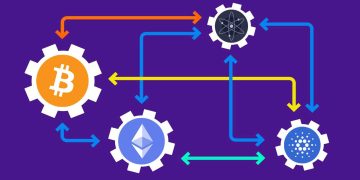
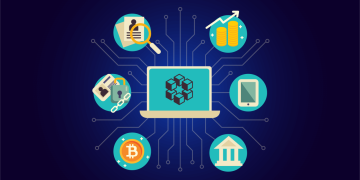
- Blockchain Integration: Combining IoT with blockchain technology can enhance the security and transparency of supply chain transactions. Blockchain can provide an immutable ledger for tracking products and transactions, while IoT devices can capture real-time data for a more comprehensive view of the supply chain.
- AI and Machine Learning: The integration of AI and machine learning with IoT devices will enable even more advanced predictive analytics, further enhancing demand forecasting, risk mitigation, and supply chain automation.
- Autonomous Supply Chains: As IoT, robotics, and AI continue to evolve, we may see the rise of fully autonomous supply chains. This could include self-driving trucks, drones for delivery, and automated warehouses, all controlled and monitored through IoT-enabled systems.
Conclusion
The integration of IoT into supply chains represents a paradigm shift in how businesses manage their operations, offering unparalleled opportunities for increased efficiency, transparency, and automation. While challenges remain in terms of data management, security, and initial investment, the benefits of IoT-enabled supply chains—ranging from improved customer experiences to reduced costs—make it a transformative technology for businesses worldwide.
As IoT continues to evolve and integrate with other emerging technologies like AI, blockchain, and 5G, the future of supply chain management will undoubtedly become smarter, more connected, and more resilient. By embracing these innovations, businesses can position themselves for success in an increasingly complex and competitive global market.