
































Introduction
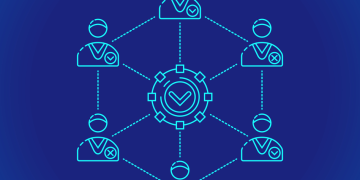
The explosive growth of blockchain technology has created opportunities and challenges across various industries, from finance to supply chain management, gaming, and beyond. At the heart of every blockchain lies the need for a consensus mechanism, a protocol used to achieve agreement on the state of the distributed ledger across decentralized participants. These mechanisms are essential for validating transactions, securing the network, and ensuring the integrity of the blockchain.
However, as blockchain networks scale, they face significant scalability issues. This challenge has prompted the development of Layer 2 solutions, which build on top of Layer 1 blockchains to address these limitations while retaining security and decentralization. Understanding the consensus mechanisms in both Layer 1 and Layer 2 is crucial for comprehending how blockchain can scale effectively and sustainably.
This article delves into the consensus mechanisms that power both Layer 1 and Layer 2 blockchain networks. It will explore their differences, their respective challenges and advantages, and how these mechanisms work together to enhance the scalability of blockchain networks. The discussion will cover a wide range of consensus protocols, including Proof of Work (PoW), Proof of Stake (PoS), and newer Layer 2 solutions like rollups and state channels.
Chapter 1: Understanding Blockchain Layers and Their Role
1.1. What is Layer 1?
Layer 1 refers to the foundational protocol of a blockchain network—the base level that governs how transactions are processed, validated, and recorded directly on the blockchain. Layer 1 blockchains define the rules of consensus, security, and transaction verification.
Examples of Layer 1 blockchains include:
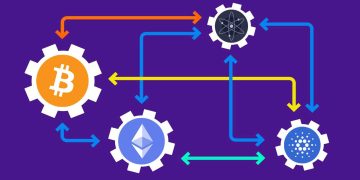
- Bitcoin: A Layer 1 network utilizing Proof of Work (PoW) for consensus.
- Ethereum: Originally using PoW, Ethereum transitioned to Proof of Stake (PoS) with Ethereum 2.0, which aims to improve scalability and reduce energy consumption.
Layer 1 consensus mechanisms are integral to ensuring that the blockchain functions properly, providing security, decentralization, and immutability of the data stored on-chain. However, Layer 1 networks are often criticized for their limitations in terms of transaction throughput and latency, especially during periods of high demand.
1.2. What is Layer 2?
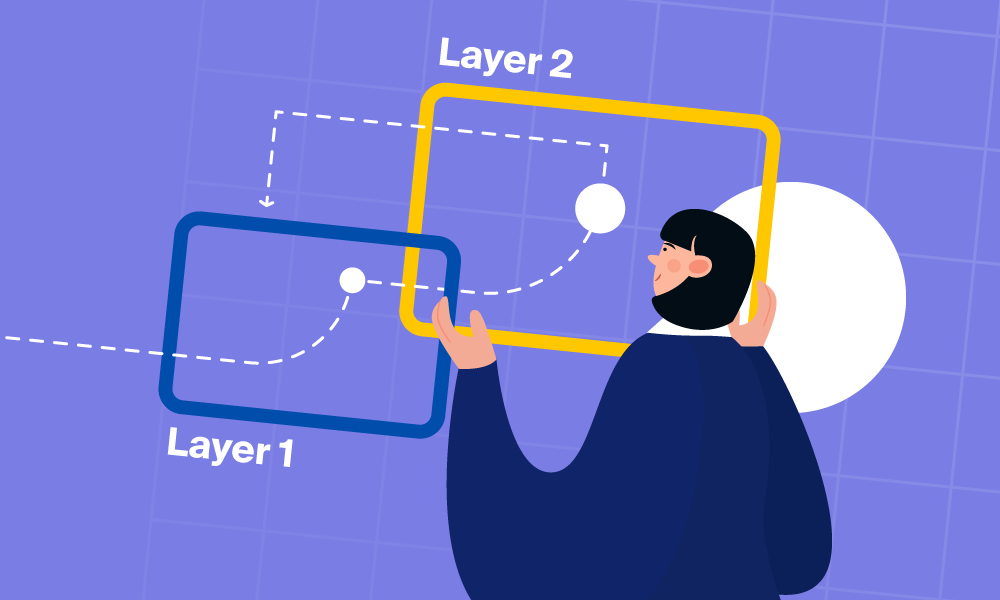
Layer 2 solutions are built on top of Layer 1 networks to help scale blockchains by offloading some of the transaction processing from the main chain. Layer 2 aims to increase transaction throughput while maintaining the core security of the underlying Layer 1 blockchain.
Examples of Layer 2 solutions include:
- The Lightning Network for Bitcoin
- Optimistic Rollups and ZK-Rollups for Ethereum
Layer 2 solutions operate off-chain or in a semi-off-chain manner, aggregating multiple transactions into a single batch or using off-chain channels to facilitate faster transactions. By doing so, they reduce the burden on Layer 1, allowing for higher throughput and lower fees while preserving the decentralized nature of the blockchain.
Chapter 2: Consensus Mechanisms in Layer 1 Blockchain Networks
2.1. Proof of Work (PoW)
Proof of Work (PoW) is the original consensus mechanism used in Bitcoin and other early blockchain networks. In PoW, miners use computational power to solve complex mathematical puzzles, with the first miner to solve the puzzle being rewarded with the ability to add a new block to the blockchain.
Pros of PoW:
- Security: PoW is considered one of the most secure consensus mechanisms because altering the blockchain would require a significant amount of computational resources, making attacks infeasible.
- Decentralization: Anyone with the necessary hardware can participate in mining, promoting decentralization.
Cons of PoW:
- Energy Consumption: PoW consumes a significant amount of electricity due to the computational power required to solve the puzzles. This has led to concerns about its environmental impact.
- Scalability Issues: PoW blockchains, like Bitcoin, can process only a limited number of transactions per second (TPS), leading to network congestion during periods of high demand.
2.2. Proof of Stake (PoS)
Proof of Stake (PoS) is an alternative to PoW that is used by blockchains like Ethereum 2.0 and Cardano. In PoS, validators are chosen to propose new blocks based on the amount of cryptocurrency they hold and are willing to “stake” as collateral. Instead of solving computational puzzles, validators are randomly selected to verify transactions and secure the network.
Pros of PoS:
- Energy Efficiency: PoS does not require extensive computational resources, making it far more energy-efficient than PoW.
- Scalability: PoS can handle more transactions per second, as the consensus mechanism is less resource-intensive.
Cons of PoS:
- Wealth Concentration: Validators with more staked tokens have a higher probability of being chosen to validate transactions, which could lead to wealth concentration and a reduction in decentralization.
- Security Risks: While PoS is secure, it still faces potential issues such as the “nothing-at-stake” problem, where validators may not have enough incentive to act honestly in certain situations.
2.3. Delegated Proof of Stake (DPoS)
Delegated Proof of Stake (DPoS) is a variant of PoS that aims to improve scalability and transaction throughput. In DPoS, token holders vote for a small number of delegates who are responsible for validating transactions and maintaining the blockchain.
Pros of DPoS:
- High Throughput: DPoS allows for faster block creation and more transactions per second, as fewer validators are involved in the consensus process.
- Governance: Token holders can vote for delegates, providing a decentralized governance model.
Cons of DPoS:
- Centralization: DPoS can lead to centralization if a small group of delegates controls the network, undermining the decentralization of the blockchain.
- Voter Apathy: If token holders do not actively vote for delegates, the system can become less secure and more prone to manipulation.
Chapter 3: Consensus Mechanisms in Layer 2 Blockchain Networks
3.1. State Channels
State Channels allow two or more participants to transact off-chain while only recording the final state of the transaction on the main blockchain. This method significantly reduces transaction costs and increases throughput, making it ideal for microtransactions and other high-frequency activities.
The Lightning Network, a Layer 2 solution for Bitcoin, is one of the most notable implementations of state channels.
Pros of State Channels:
- Low Fees: State channels allow for off-chain transactions, which reduces the cost of each transaction.
- Privacy: Since transactions occur off-chain, they are more private than those on the public blockchain.
Cons of State Channels:
- Limited Scope: State channels are best suited for smaller, two-party transactions and may not be practical for large-scale decentralized applications (dApps).
- Liquidity Requirements: Participants need to lock up funds in a smart contract, which may limit the number of users willing to participate.
3.2. Rollups
Rollups are Layer 2 solutions that aggregate many transactions into a single batch and post this batch to the main blockchain. This reduces the load on the main chain and improves scalability without compromising on security.
There are two primary types of rollups:
- Optimistic Rollups: These assume that transactions are valid and only verify them if a dispute occurs.
- Zero-Knowledge Rollups (ZK-Rollups): These use cryptographic proofs to validate the correctness of transactions off-chain before posting them to the main chain.
Pros of Rollups:
- Scalability: Rollups dramatically increase transaction throughput by processing transactions off-chain while maintaining the security of the main blockchain.
- Cost Efficiency: By batching transactions, rollups lower transaction fees.
Cons of Rollups:
- Complexity: Implementing rollups is more complex than state channels and may require specialized infrastructure.
- Data Availability: Ensuring that all data required for rollup validation is available off-chain can be a challenge.
Chapter 4: The Interplay Between Layer 1 and Layer 2 Consensus Mechanisms
4.1. Synergy Between Layer 1 and Layer 2
Layer 1 and Layer 2 solutions complement each other in the blockchain ecosystem. While Layer 1 focuses on ensuring the security and decentralization of the network, Layer 2 solutions enhance scalability and transaction throughput. Together, they enable blockchain networks to handle a larger volume of transactions without compromising on the core principles of decentralization and security.
For example, Ethereum’s transition to Proof of Stake on Layer 1 and the use of Optimistic Rollups or ZK-Rollups on Layer 2 enable the network to scale without sacrificing security. These hybrid approaches allow Ethereum to support high-demand applications, including decentralized finance (DeFi) and non-fungible tokens (NFTs), with minimal transaction fees.
4.2. Challenges and Trade-offs
While Layer 1 and Layer 2 solutions offer significant improvements in scalability and performance, there are trade-offs to consider:
- Security Trade-offs: Layer 2 solutions, while faster and more efficient, may introduce risks in terms of data availability or potential attack vectors.
- Complexity and Integration: Implementing and managing both Layer 1 and Layer 2 solutions can be complex, requiring extensive infrastructure and integration efforts.
- Centralization Risks: Some Layer 2 solutions, such as DPoS, can lead to centralization, undermining the decentralization that blockchain technology aims to achieve.
Conclusion
The evolution of Layer 1 and Layer 2 consensus mechanisms is crucial to the scalability and adoption of blockchain technology. While Layer 1 solutions like PoW and PoS provide the fundamental security and decentralization needed for blockchain networks, Layer 2 solutions such as state channels and rollups offer the scalability necessary for blockchain to handle mainstream adoption.
As the blockchain space continues to evolve, both Layer 1 and Layer 2 technologies will play an essential role in solving the scalability trilemma of blockchain—balancing security, decentralization, and scalability. Understanding how these consensus mechanisms interact and complement each other will be vital for businesses, developers, and investors looking to navigate the future of blockchain technology.