



































Introduction
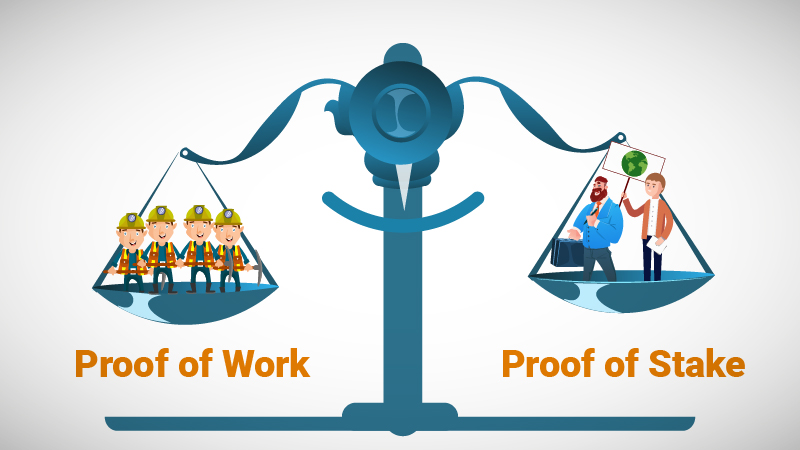
In the world of blockchain technology, the debate between Proof of Work (PoW) and Proof of Stake (PoS) has gained significant attention, especially in the wake of rising environmental concerns and the increasing demand for faster, more efficient blockchain networks. While PoW has historically been the dominant consensus mechanism—used by Bitcoin and many other cryptocurrencies—PoS is rapidly emerging as an energy-efficient alternative that promises higher network throughput without the environmental toll that PoW incurs.
The environmental impact of PoW has been a significant point of contention. The high energy consumption required to secure and validate transactions on PoW-based blockchains, particularly Bitcoin, has raised alarms about its sustainability, especially as the world transitions toward more sustainable energy solutions. In contrast, PoS, by design, dramatically reduces energy consumption and offers scalability advantages, making it an attractive alternative for blockchain networks that prioritize sustainability and speed.
This article will delve into the core differences between PoW and PoS, focusing on how PoS provides significant energy savings while offering a higher network throughput. We will explore the mechanics of both consensus algorithms, analyze their strengths and weaknesses, and examine how PoS is paving the way for the future of blockchain technology.
Chapter 1: Understanding Proof of Work (PoW)
1.1. The Basics of Proof of Work
Proof of Work is the original consensus mechanism introduced by Bitcoin‘s pseudonymous creator, Satoshi Nakamoto, in 2008. It relies on miners solving complex mathematical puzzles to validate transactions and secure the network. The process of mining requires computational power to perform calculations, which in turn consumes significant amounts of electricity. The first miner to solve the puzzle and validate a block of transactions is rewarded with the cryptocurrency of the network—in Bitcoin’s case, new BTC coins.
Key Features of PoW:
- Mining Process: PoW relies on miners competing to solve cryptographic puzzles, which requires high computational resources. This process, often referred to as mining, is resource-intensive.
- Security: PoW provides robust security as the decentralized nature of the network ensures that malicious actors would need to control more than 50% of the network’s mining power (a 51% attack) to manipulate the blockchain.
- Decentralization: PoW maintains decentralization by allowing anyone with the necessary computational resources to participate in the network and validate transactions.
1.2. The Energy Consumption Issue
The primary drawback of PoW is its high energy consumption. Mining requires powerful hardware (such as ASICs and GPUs) to solve the cryptographic puzzles, and this hardware consumes a substantial amount of electricity. As the difficulty of mining increases with each new block, the energy required to secure the network grows, leading to environmental concerns.
For example, Bitcoin’s mining network alone consumes more energy annually than some countries, such as Argentina. This has sparked a growing debate about the sustainability of PoW-based cryptocurrencies, especially when energy is sourced from non-renewable, polluting sources like coal.
1.3. Scalability Challenges of PoW
While PoW is known for its security and decentralization, it faces scalability challenges, especially as the demand for blockchain networks increases. As more transactions are added to the blockchain, the network becomes slower, and transaction fees rise. For example, Bitcoin can only process around seven transactions per second (TPS), significantly limiting its throughput compared to centralized payment systems like Visa, which can handle thousands of transactions per second.
Chapter 2: Proof of Stake (PoS) – A More Energy-Efficient Consensus Mechanism
2.1. What is Proof of Stake?
Proof of Stake (PoS) is a consensus mechanism that aims to address the energy inefficiency and scalability issues associated with PoW. PoS was first introduced as an alternative to PoW, with the goal of maintaining decentralization while significantly reducing the energy consumption required to secure the network.
Instead of relying on computational power to validate transactions, PoS involves validators who are chosen to propose and validate new blocks based on the amount of cryptocurrency they “stake” or lock up as collateral. The higher the stake, the higher the chance a validator has of being chosen to validate a block and receive a reward.
Key Features of PoS:
- Staking: Validators lock up a certain amount of cryptocurrency as a form of collateral to participate in the block validation process. This incentivizes validators to act honestly, as they stand to lose their staked assets if they are found to be malicious.
- Energy Efficiency: PoS eliminates the need for energy-intensive mining processes. Instead of solving cryptographic puzzles, validators are selected to validate transactions based on their stake and other factors, significantly reducing energy consumption.
- Security: PoS networks rely on economic incentives, with validators at risk of losing their staked assets if they attempt to attack the network. This creates strong disincentives for malicious behavior, ensuring the security of the network.
2.2. Energy Efficiency of PoS
One of the main advantages of PoS is its energy efficiency. Since PoS does not require miners to perform complex computations, it dramatically reduces the overall energy consumption of the blockchain network. Validators only need to store the blockchain and process transactions, which requires far less electricity compared to PoW mining.
For instance, Ethereum, which transitioned from PoW to PoS with its Ethereum 2.0 upgrade, is estimated to reduce its energy consumption by 99.95% after the full implementation of PoS. This transition has been hailed as a major step toward the sustainability of blockchain technologies.
2.3. Scalability Advantages of PoS
In addition to energy efficiency, PoS offers significant scalability improvements over PoW. PoS can process transactions faster because it does not rely on the computationally expensive mining process. Validators are chosen based on their stake, and new blocks can be proposed and added to the blockchain more quickly. This results in higher network throughput and lower transaction costs.
For example, Ethereum 2.0 aims to increase Ethereum’s throughput from 15 TPS (on the Ethereum PoW chain) to thousands of transactions per second using PoS and shard chains. This makes PoS-based blockchains more competitive in terms of speed and scalability compared to traditional centralized payment systems.

Chapter 3: Comparison of PoW and PoS in Terms of Energy Consumption and Network Throughput
3.1. Energy Consumption Comparison
One of the most striking differences between PoW and PoS lies in energy consumption. PoW requires miners to perform computationally intensive work to secure the network, leading to high electricity usage. PoS, on the other hand, reduces energy consumption by eliminating the need for mining and instead relying on validators with stakes in the network.
To put this into perspective, Bitcoin’s energy consumption has been compared to that of entire countries, such as Switzerland, while Ethereum, after its shift to PoS, is expected to consume a fraction of the energy previously required.
- PoW (Bitcoin): High energy consumption due to mining and computational puzzles. Bitcoin’s energy consumption is estimated to be over 100 TWh annually.
- PoS (Ethereum 2.0): With PoS, Ethereum’s energy consumption will be reduced by 99.95%, representing a major win for sustainability.
3.2. Network Throughput Comparison
Network throughput refers to the number of transactions a blockchain can process per second (TPS). PoW blockchains like Bitcoin and Ethereum (prior to Ethereum 2.0) have relatively low throughput, with Bitcoin capable of handling only 7 TPS and Ethereum around 15 TPS.
In contrast, PoS networks can handle much higher throughput due to the elimination of the energy-intensive mining process and the use of more efficient block validation methods.
- PoW (Bitcoin): 7 TPS with relatively high transaction fees.
- PoS (Ethereum 2.0): Thousands of TPS, with the potential to scale further with shard chains.
This scalability advantage makes PoS-based networks more suitable for high-volume use cases, such as DeFi, NFTs, and large-scale payment systems.
Chapter 4: The Future of PoS and the Shift Toward Sustainability
4.1. The Transition of Ethereum to PoS
Ethereum’s transition from PoW to PoS is one of the most significant developments in the blockchain world. The Ethereum 2.0 upgrade aims to improve scalability, reduce energy consumption, and enhance the overall user experience on the network. By moving to PoS, Ethereum hopes to become more energy-efficient while addressing the scalability issues that have plagued the network for years.
- Proof of Stake and Sharding: The integration of sharding in Ethereum 2.0 will further increase scalability by splitting the network into smaller, manageable pieces, allowing for parallel transaction processing.
- Environmental Impact: Ethereum’s move to PoS is expected to reduce its carbon footprint dramatically. The shift will make Ethereum one of the most environmentally friendly blockchain networks while also enhancing its performance.
4.2. The Role of PoS in a Sustainable Blockchain Ecosystem
As concerns about the environmental impact of blockchain technologies grow, PoS provides a promising path forward. PoS-based blockchains are already becoming the preferred choice for new blockchain projects, especially those focused on sustainability and energy efficiency.
- Sustainable Blockchain Projects: Many new blockchain projects, such as Cardano, Polkadot, and Tezos, are built using PoS or similar consensus mechanisms. These networks prioritize low energy consumption, making them more attractive to environmentally-conscious investors and users.
- Global Sustainability Goals: As the world increasingly focuses on sustainable development goals (SDGs) and carbon-neutral initiatives, PoS provides a viable solution for reducing the environmental impact of blockchain technology while still offering high performance and decentralization.
Conclusion
The comparison between Proof of Work and Proof of Stake highlights the significant advantages that PoS brings to the table in terms of energy efficiency and network throughput. While PoW has played a critical role in securing decentralized networks like Bitcoin, its energy-intensive nature has made it unsustainable in the long run. PoS offers a greener, more scalable alternative, providing blockchain networks with the ability to handle a larger volume of transactions while using a fraction of the energy required by PoW-based systems.
As blockchain technology continues to evolve, PoS is poised to become the consensus mechanism of choice for many new and existing networks, including Ethereum’s transition to PoS with Ethereum 2.0. The future of blockchain lies in finding solutions that balance security, decentralization, scalability, and sustainability. PoS offers a promising path forward, and its widespread adoption is likely to play a key role in the future of decentralized technologies.