
































Introduction
The U.S. Securities and Exchange Commission (SEC) has long been one of the most influential regulatory bodies in the financial world. Established in 1934 in response to the stock market crash of 1929, the SEC was tasked with restoring investor confidence and ensuring the stability of the U.S. financial system. Over the decades, the SEC has adapted to evolving markets, and in recent years, its role has expanded to include overseeing the rapidly growing and increasingly complex cryptocurrency market.
Cryptocurrencies, initially viewed as an esoteric and fringe asset class, have entered the mainstream, with digital assets like Bitcoin, Ethereum, and countless altcoins now comprising a multi-trillion-dollar global market. As this market continues to expand, so too does the need for regulation to protect investors, prevent fraud, and maintain market integrity. The SEC has become one of the most critical players in regulating cryptocurrencies, as its jurisdiction over securities laws allows it to address a wide range of activities within the space, including initial coin offerings (ICOs), token sales, and trading of digital assets.
This article will explore the role of the SEC in the cryptocurrency market, its regulatory actions, challenges, and the potential impact of its evolving stance on digital assets. It will also examine the broader regulatory landscape for cryptocurrencies and how the SEC’s decisions affect the future of blockchain technologies, innovation, and market growth.
Chapter 1: The Role of the SEC in the U.S. Financial System
1.1. Background and Mission of the SEC
The SEC was founded with the mission of protecting investors, maintaining fair and efficient markets, and facilitating capital formation. The agency’s primary responsibilities include overseeing the securities markets, enforcing securities laws, and regulating publicly traded companies. This mission is crucial in ensuring that the U.S. financial markets remain stable, transparent, and trustworthy, which in turn fosters investor confidence.
The SEC’s key functions include:
- Enforcing Securities Laws: The SEC enforces regulations that govern how securities are traded and ensures compliance with disclosure requirements to maintain transparency in the financial markets.
- Regulating Market Participants: The SEC oversees entities such as brokerage firms, investment advisors, exchanges, and public companies to ensure that they operate fairly and transparently.
- Investor Protection: Through investor education and regulation, the SEC works to ensure that investors have access to accurate and timely information to make informed decisions.
1.2. The SEC’s Jurisdiction Over Securities
The SEC’s jurisdiction primarily extends to the securities market, which includes stocks, bonds, and other financial instruments. A security is broadly defined as any tradable financial asset, and the SEC has authority to regulate the issuance, trading, and sale of these assets. This regulatory oversight is vital for maintaining trust in the U.S. financial markets.
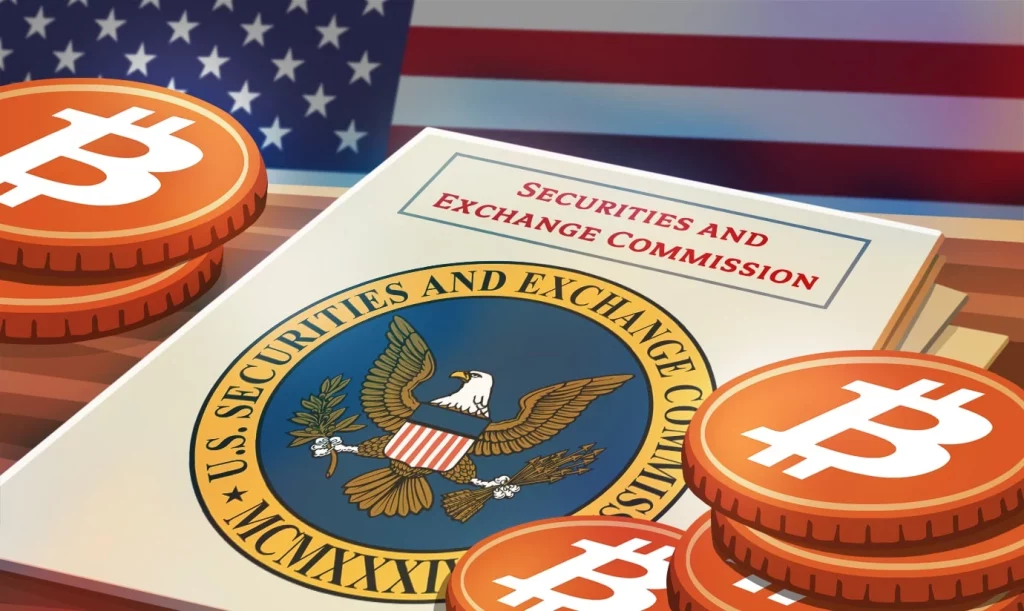
In the context of cryptocurrencies and digital assets, the SEC has focused on determining whether certain cryptocurrencies and tokens qualify as securities under U.S. law. This determination has major implications for how these assets are treated legally, as securities are subject to rigorous regulations concerning registration, disclosure, and trading. The SEC’s actions have shaped how digital assets are offered to the public and how they can be legally traded in the U.S. markets.
Chapter 2: The SEC’s Approach to Cryptocurrency Regulation
2.1. The SEC and the Question of Whether Cryptocurrencies Are Securities
One of the key issues in cryptocurrency regulation is whether digital assets should be classified as securities under U.S. law. The SEC has provided guidance over the years regarding how it views certain cryptocurrencies, and its stance has evolved as the market has matured.
- The Howey Test: The SEC has used the Howey Test, a legal framework developed in a 1946 U.S. Supreme Court case, to determine whether an asset qualifies as an investment contract (and thus a security). According to the Howey Test, an asset is a security if it involves an investment of money in a common enterprise with the expectation of profits derived from the efforts of others.
- Bitcoin and Ethereum: The SEC has indicated that certain cryptocurrencies, such as Bitcoin and Ethereum, do not qualify as securities. Bitcoin, for example, is viewed as a decentralized digital asset that functions more like a commodity rather than an investment contract. Ethereum, which initially faced scrutiny over its ICO in 2014, has since been deemed not to be a security due to its shift to a more decentralized platform.
- ICO Scrutiny: In contrast, many tokens sold through initial coin offerings (ICOs) and token sales have been found to meet the definition of securities. ICOs became a popular fundraising method in the cryptocurrency space, but the SEC has scrutinized these offerings for potentially violating securities laws by failing to register the tokens or provide adequate disclosures to investors.
2.2. The SEC’s Regulation of Initial Coin Offerings (ICOs)
ICOs became a major fundraising method for new cryptocurrency projects, allowing startups to raise capital by issuing new tokens in exchange for cryptocurrency (typically Bitcoin or Ethereum). While ICOs promised innovation and democratization of investment opportunities, they also raised concerns about fraud, lack of investor protection, and market manipulation.
- Regulation of ICOs: The SEC has taken a strict stance on ICOs, particularly those that involve the sale of tokens that are classified as securities. Many ICOs failed to comply with securities laws, and the SEC has taken enforcement actions against companies that conducted unregistered offerings. In some cases, the SEC has imposed fines and required companies to refund investors.
- Settlement and Compliance: The SEC has entered into settlements with several crypto companies that conducted unregistered ICOs, requiring them to register their tokens as securities and adhere to investor protection regulations. These settlements also often include penalties and mandates for companies to provide greater transparency in their operations.
2.3. The SEC and Crypto Exchanges
Crypto exchanges are central to the operation of the cryptocurrency market, as they facilitate the buying, selling, and trading of digital assets. However, many exchanges have operated in a regulatory gray area, without clear guidance from authorities on how they should comply with U.S. securities laws.
- Regulation of Crypto Exchanges: The SEC has begun to scrutinize crypto exchanges that offer the trading of tokens that are classified as securities. In some cases, the SEC has required exchanges to register as national securities exchanges under U.S. law or face penalties.
- The Binance and Coinbase Cases: The SEC has taken enforcement actions against exchanges like Binance and Coinbase for offering unregistered securities to U.S. investors. The SEC’s position is that if an exchange lists securities (even in the form of tokens), it must comply with the same regulations that govern traditional stock exchanges. These actions have led to a complex and evolving regulatory environment for U.S.-based crypto exchanges.
Chapter 3: The Challenges of Regulating Cryptocurrencies
3.1. The Evolving Nature of the Crypto Market
One of the challenges the SEC faces in regulating the cryptocurrency market is the rapid pace of innovation. New projects, tokens, and financial products emerge almost daily, and the SEC must continually adapt to keep up with these developments. Unlike traditional financial markets, where the rules and products are more established, the cryptocurrency market is highly dynamic, and many projects operate in a decentralized manner, complicating regulatory oversight.
- Decentralization and Anonymity: The decentralized nature of many cryptocurrency projects presents a challenge for regulators. Without a central authority or company to hold accountable, it becomes difficult to enforce regulations, especially in cases where projects are built on blockchain networks that are governed by communities rather than centralized entities.
- Innovation vs. Regulation: The SEC is tasked with striking a balance between fostering innovation and ensuring that the market remains secure and transparent. Over-regulation could stifle innovation and push projects overseas, while under-regulation could lead to fraud and abuse. Finding this balance is a key challenge for the SEC and other regulatory bodies.
3.2. The Need for Comprehensive Legislation
While the SEC has provided some guidance on cryptocurrency regulation, the lack of comprehensive legislation for digital assets remains a significant challenge. The U.S. regulatory landscape for cryptocurrencies is fragmented, with several agencies, including the Commodity Futures Trading Commission (CFTC), the Financial Crimes Enforcement Network (FinCEN), and state regulators, also playing a role.
- Call for Clarity: Many in the cryptocurrency industry have called for more comprehensive and clearer regulatory frameworks. The current patchwork of regulations can be confusing, and there is a need for federal legislation that defines the legal status of cryptocurrencies and sets forth clear rules for market participants.
- The Role of Congress: Members of Congress have introduced various bills aimed at regulating cryptocurrencies, but the legislative process has been slow. Some proposals suggest establishing a clearer distinction between cryptocurrencies and securities, while others call for more protections for investors and greater enforcement of anti-money laundering (AML) and know-your-customer (KYC) regulations.
Chapter 4: The Future of Cryptocurrency Regulation in the U.S.
4.1. The SEC’s Ongoing Efforts to Adapt
The SEC continues to refine its approach to cryptocurrency regulation, working with other regulators to develop a more comprehensive framework. It is likely that the agency will increasingly focus on protecting investors and ensuring market integrity, while trying to avoid stifling innovation in the industry.
- Clearer Guidelines: As the market matures, the SEC may issue clearer guidelines on the classification of digital assets, ICOs, and other crypto-related activities. This could provide more certainty for entrepreneurs, investors, and market participants.
- International Collaboration: The global nature of cryptocurrency markets requires international cooperation. The SEC may work more closely with other countries’ regulators, such as the European Securities and Markets Authority (ESMA) or the Financial Conduct Authority (FCA) in the UK, to create consistent global standards for crypto regulation.
4.2. Impact on Innovation and Market Growth
The SEC’s decisions will have a significant impact on the growth and evolution of the cryptocurrency market. Regulatory clarity could foster greater institutional investment and mainstream adoption of digital assets, as investors and businesses would have more confidence in the legal framework.
- Investor Protection: With appropriate regulation, the SEC can help protect investors from fraud and market manipulation, which will increase trust in the cryptocurrency market.
- Global Competitiveness: As other countries begin to develop their own cryptocurrency regulations, the U.S. must ensure that it remains competitive in attracting blockchain innovation and talent, while still upholding high standards of investor protection and market integrity.
Conclusion
The U.S. SEC plays a pivotal role in shaping the regulatory landscape for the cryptocurrency market. As the market continues to grow and evolve, the SEC’s actions will be critical in ensuring that it remains fair, transparent, and secure. However, the challenges associated with regulating digital assets—such as their decentralization, rapid innovation, and cross-border nature—require ongoing adaptation and collaboration with other regulators and stakeholders.
As the SEC refines its approach to cryptocurrency regulation, it will need to balance protecting investors, encouraging innovation, and maintaining market integrity. The decisions made by the SEC in the coming years will be instrumental in determining the future of digital assets, and their impact will be felt globally.