


























1. Introduction: The Need for Efficient and Secure Data Management in Enterprises
1.1 The Growing Role of Data in Business Operations
Data is at the heart of modern businesses. From customer interactions to supply chain logistics, data is used across all facets of enterprise operations. As companies generate and consume more data, the ability to manage it effectively and securely becomes increasingly important.
However, managing data at scale often leads to several challenges:
- Data Fragmentation: Enterprises often rely on disparate systems that may not communicate seamlessly, resulting in fragmented data across departments.
- Security Risks: Sensitive business data, such as financial records, customer information, and intellectual property, is vulnerable to theft or tampering when stored in centralized databases.
- Inefficient Processes: Traditional systems may involve manual processes or rely on intermediaries, leading to delays, errors, and inefficiencies in data handling.
1.2 Blockchain as a Solution for Enterprise Data Management
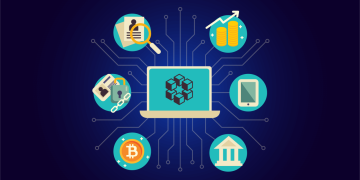
Blockchain offers a solution to these challenges by providing a decentralized, transparent, and immutable framework for managing data. By integrating blockchain into their operations, enterprises can:
- Enhance the Efficiency of data management through automation and streamlined processes.
- Secure Data through cryptographic encryption and decentralized validation mechanisms.
- Improve Transparency and auditability by providing immutable records that can be easily verified and traced.
2. How Blockchain Enhances Internal Data Management Efficiency
2.1 Streamlining Business Operations with Smart Contracts
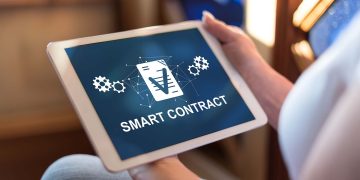
One of the key advantages of using blockchain in enterprise environments is the ability to implement smart contracts. These self-executing contracts automatically enforce the terms of an agreement between two or more parties without requiring intermediaries.
For businesses, smart contracts can:
- Automate Processes: Smart contracts can automatically execute transactions or trigger actions when predefined conditions are met. This reduces the need for manual intervention and helps speed up processes like approvals, invoicing, and payment processing.
- Reduce Errors: Since smart contracts are coded and executed automatically, the chances of human error are minimized. This can be particularly important in data-heavy processes such as auditing, procurement, and compliance.
- Enhance Trust: Because the terms of smart contracts are transparent and immutable on the blockchain, parties can trust that the contract will be executed as agreed without needing to rely on a third-party intermediary.
2.2 Improving Data Access and Interoperability
In many enterprises, data is siloed across different departments, making it difficult to access, share, and manage effectively. Blockchain helps solve this problem by:
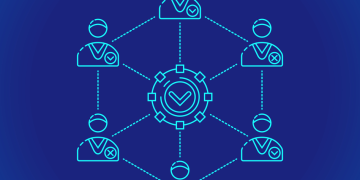
- Providing a Single Source of Truth: By recording all transactions and data exchanges on a shared decentralized ledger, blockchain ensures that every participant in the network has access to the same accurate and up-to-date information.
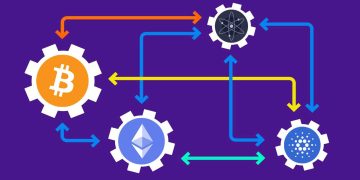
- Enabling Seamless Interoperability: Blockchain facilitates better integration between disparate systems, allowing data to be shared seamlessly across departments, locations, and even with external partners. This enables cross-functional collaboration and helps eliminate data bottlenecks.
- Enhancing Data Accuracy: With blockchain’s immutability, once data is recorded, it cannot be altered. This ensures that the information used by different departments is consistent and trustworthy.

3. Blockchain for Secure Data Storage
3.1 Decentralization for Data Security
Traditional enterprise systems typically store data in centralized databases, which are vulnerable to cyberattacks, data breaches, and unauthorized access. Blockchain, on the other hand, uses a decentralized approach, where data is distributed across a network of nodes.
Key advantages of blockchain’s decentralized structure include:
- Reduced Single Points of Failure: By storing data across multiple nodes, blockchain mitigates the risk of a single point of failure. Even if one node is compromised, the rest of the network remains secure.
- Increased Data Redundancy: Blockchain provides multiple copies of data across different locations, improving data availability and resilience.
- Encryption and Access Control: Blockchain uses advanced cryptographic algorithms to secure data. Only those with the proper decryption keys can access or alter the data, providing robust security even when data is shared across networks.
3.2 Immutability for Data Integrity
One of blockchain’s most significant features is its immutability. Once data is recorded on the blockchain, it is cryptographically linked to the next block, creating a permanent, tamper-proof record.
For enterprises, this has several benefits:
- Data Integrity: The immutability of blockchain ensures that data cannot be altered or deleted once it has been recorded. This is especially important for industries that rely on the accuracy and transparency of data, such as finance, healthcare, and supply chain management.
- Auditability: Blockchain provides a transparent and auditable record of all transactions, making it easier for businesses to track and verify the history of data. This is particularly useful for regulatory compliance and internal audits.
- Protection Against Fraud: Since tampering with blockchain data is nearly impossible, businesses can be assured that the records they are working with are accurate and free from fraud.
4. Enhancing Data Exchange Security with Blockchain
4.1 Blockchain for Secure Data Sharing Across Parties
Data exchange between enterprises often involves multiple stakeholders, from suppliers and vendors to customers and regulators. Traditional data exchange systems can be slow, expensive, and vulnerable to data breaches.
Blockchain addresses these issues by providing a secure and transparent platform for data exchange. Key benefits include:
- Encrypted Data Transfers: Blockchain’s encryption ensures that data exchanged between parties is secure and unreadable to unauthorized users.
- Smart Contracts for Automation: As previously mentioned, smart contracts can automate data exchange processes, ensuring that data is transferred only when certain conditions are met. This adds a layer of security and reduces the potential for human error or fraud.
- Traceability and Transparency: Blockchain allows businesses to track the entire lifecycle of data exchanges. Every transaction is recorded on the blockchain, creating a verifiable and transparent audit trail that can be accessed by authorized parties.
4.2 Cross-Enterprise Collaboration and Data Sharing
Blockchain enables secure collaboration between enterprises and external partners, particularly in industries where data sharing and transparency are critical. Examples include:
- Supply Chain Management: Blockchain ensures that all participants in the supply chain have access to the same information, providing visibility into the movement of goods, inventory levels, and shipment statuses. This helps prevent fraud and errors, enhancing trust between suppliers, manufacturers, and distributors.
- Healthcare Data Exchange: Blockchain can facilitate secure data exchange between healthcare providers, ensuring that patient information is accurate and up-to-date. This can improve patient care, reduce duplication of services, and streamline billing processes.
5. Challenges and Limitations of Blockchain in Enterprise Data Management
5.1 Scalability Issues
While blockchain offers immense potential for enterprises, scalability remains a challenge. As blockchain networks grow, the volume of data and transactions increases, which can strain network resources and slow down transaction processing times.
Solutions such as layer-2 scaling and sharding are being explored to overcome these challenges, but widespread adoption may take time.
5.2 Regulatory and Compliance Concerns
Enterprises operating in highly regulated industries, such as finance and healthcare, must ensure that blockchain implementations comply with relevant laws and regulations. The immute nature of blockchain presents challenges when it comes to data deletion requests under regulations like the General Data Protection Regulation (GDPR).
5.3 Integration with Legacy Systems
Integrating blockchain with existing enterprise systems can be complex and costly. Many businesses are already invested in legacy technologies, and moving to a decentralized blockchain solution requires significant technical expertise and resources.
6. The Future of Blockchain in Enterprise Data Management
Blockchain technology is rapidly evolving, and its application in enterprise data management is set to increase. Future developments may address current challenges such as scalability, interoperability, and regulatory compliance. As blockchain matures, it has the potential to become the standard for data management, security, and exchange across all industries.
Enterprises that embrace blockchain early will likely gain a competitive edge in managing data more efficiently, securely, and transparently. The integration of advanced cryptographic algorithms, AI, and smart contracts will only further enhance blockchain’s ability to revolutionize enterprise operations.
Conclusion
Blockchain technology holds the key to transforming enterprise data management. By offering a decentralized, secure, and immutable framework, it helps businesses streamline operations, secure data, and facilitate efficient data exchanges. While challenges remain, the future of enterprise blockchain is bright, and businesses that adopt it will be better positioned to navigate the increasingly complex and data-driven business environment.