































1. Introduction: The Rise of Blockchain in Banking and Finance
The financial services industry has long been plagued by inefficiencies, particularly in processes like clearing and settlement, securities trading, and trade finance. Traditional systems rely heavily on centralized databases, intermediaries, and paper-based processes that slow down transactions, increase operational risks, and raise costs. In this context, enterprise blockchain—a permissioned form of blockchain designed for businesses—offers significant advantages.
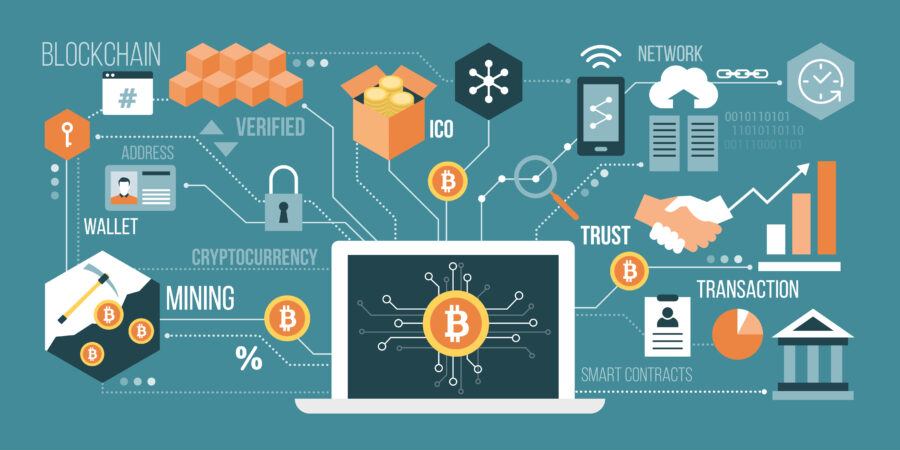
Enterprise blockchain has emerged as a promising solution for financial institutions looking to improve efficiency, security, and transparency. By using distributed ledger technology (DLT), blockchain offers a way to digitally record transactions in a tamper-proof and transparent manner. This offers a range of benefits, including the elimination of intermediaries, reduction of settlement times, and enhancement of data security. As the financial industry evolves, blockchain is increasingly being adopted for a wide variety of applications, especially in areas such as clearing and settlement, securities trading, and trade finance.
In this article, we will explore the role of blockchain in transforming these key areas of finance, delving into the underlying technology, examining real-world use cases, and analyzing the regulatory and operational challenges that must be overcome for its widespread adoption.
2. Blockchain for Clearing and Settlement: Accelerating Transaction Finality
2.1 Traditional Clearing and Settlement Systems
Clearing and settlement refer to the process by which financial transactions—such as securities trades—are confirmed and finalized. Traditionally, this process involves multiple intermediaries, including clearinghouses, custodians, and settlement agents. The challenges of traditional systems include:
- Slow Processing: The settlement of financial transactions can take several days, especially in cross-border transactions, due to the need for manual verification and reconciliation between different parties.
- High Costs: Each intermediary in the settlement chain adds fees, which increase the overall cost of the transaction. For example, clearinghouses charge for facilitating the transaction, while custodians charge for holding securities.
- Operational Risks: The involvement of multiple parties increases the potential for human error, fraud, and delays. The reconciliation process is prone to discrepancies, which can cause delays in settlement and increase operational costs.
2.2 Blockchain’s Advantages for Clearing and Settlement
Blockchain offers a decentralized solution to these challenges, enabling the real-time settlement of transactions without the need for intermediaries. By recording transactions on a tamper-proof distributed ledger, blockchain ensures that all parties have access to a single version of the truth, eliminating the need for manual reconciliation.
Key Benefits of Blockchain for Clearing and Settlement:
- Faster Settlements: Blockchain enables near-instantaneous settlement, reducing the time between trade execution and settlement from several days to just a few seconds or minutes.
- Cost Reduction: By eliminating intermediaries, blockchain reduces the fees associated with clearing and settlement, benefiting financial institutions and their clients.
- Increased Security: Blockchain’s cryptographic security ensures that transactions are secure and tamper-proof, reducing the risk of fraud and human error.
- Transparency and Audibility: Blockchain provides a transparent record of all transactions, which can be accessed by authorized participants at any time. This enhances regulatory compliance and facilitates real-time auditing.
Real-World Applications:
- The London Stock Exchange (LSE): The LSE is exploring blockchain for trade settlement, aiming to reduce settlement time from three days to just minutes. Their efforts are focused on using blockchain to enhance transparency and streamline the entire process.
- DTCC (Depository Trust & Clearing Corporation): DTCC, which processes trillions of dollars in securities transactions daily, has been working on a blockchain-based solution called Project Ion to reduce settlement times and improve operational efficiency.
3. Blockchain for Securities Trading: Unlocking Efficiency and Liquidity
3.1 Challenges in Traditional Securities Trading
Securities trading refers to the buying and selling of financial instruments like stocks, bonds, and derivatives. Traditional securities trading systems are highly fragmented and often require multiple intermediaries, including brokers, exchanges, and clearinghouses. The challenges of traditional systems include:
- Fragmentation: Different financial instruments are traded on different exchanges, making it difficult for traders to access liquidity from multiple sources.
- High Costs: The involvement of multiple parties in the transaction process drives up the costs for market participants. Brokers, exchanges, and custodians all charge fees for facilitating trades.
- Limited Liquidity: Securities markets are often characterized by limited liquidity, especially for illiquid assets such as certain bonds or derivatives.
3.2 How Blockchain Enhances Securities Trading
Blockchain’s distributed ledger technology offers a solution to these challenges by enabling decentralized trading platforms and reducing the need for intermediaries. Tokenization, the process of representing assets as digital tokens on the blockchain, is one of the key innovations that blockchain brings to securities trading.
Key Benefits of Blockchain for Securities Trading:
- Decentralized Exchanges (DEX): Blockchain enables the creation of decentralized exchanges, where assets can be traded directly between parties without the need for an intermediary. This enhances liquidity and allows for trading across different asset classes on a single platform.
- Tokenization of Assets: By converting securities into digital tokens, blockchain allows for fractional ownership and enables new liquidity opportunities, especially for illiquid assets like real estate or fine art.
- Faster Settlement: Blockchain’s real-time settlement capabilities significantly reduce the time and cost associated with securities transactions, improving market efficiency.
- Increased Transparency: Blockchain’s transparent nature provides all market participants with access to a real-time ledger of trades, improving market transparency and trust.
Real-World Applications:
- tZero: tZero is a blockchain-based platform that facilitates security token trading. It allows for the trading of digital securities in a decentralized and transparent environment, enabling fractional ownership and improving liquidity.
- The Swiss SIX Digital Exchange: The SIX Digital Exchange, based in Switzerland, leverages blockchain for tokenized securities trading, enabling faster and more secure trading of tokenized assets, such as equities and bonds.
4. Blockchain in Trade Finance: Streamlining Global Trade Operations
4.1 Challenges in Traditional Trade Finance
Trade finance is the process that enables international trade by providing the necessary financial products, such as letters of credit, guarantees, and financing. Traditional trade finance is fraught with inefficiencies, including:
- Manual Documentation: Trade finance relies heavily on paper-based documentation, which leads to delays, errors, and fraud risks.
- High Costs: The involvement of multiple intermediaries in the trade finance process drives up costs, especially for small and medium-sized enterprises (SMEs).
- Lack of Transparency: The complexity of trade finance transactions, particularly in cross-border trade, makes it difficult for parties to track the progress and status of their transactions in real time.
4.2 How Blockchain is Transforming Trade Finance
Blockchain can streamline trade finance processes by providing a digital, tamper-proof record of transactions. By using blockchain, participants in a trade finance transaction can have real-time visibility of trade activities, reducing paperwork, minimizing risks, and improving efficiency.
Key Benefits of Blockchain for Trade Finance:
- Paperless Transactions: Blockchain can digitize trade documents, eliminating the need for paper-based processes. Smart contracts can automate key functions such as payments, reducing the time required to complete a transaction.
- Increased Efficiency: Blockchain reduces the need for intermediaries by enabling direct communication and transaction processing between buyers, sellers, and financial institutions.
- Improved Transparency: Blockchain offers real-time visibility into the status of trade transactions, improving transparency and reducing fraud risks.
- Access to Finance for SMEs: By reducing documentation and compliance costs, blockchain can lower the barriers to entry for SMEs looking to engage in international trade.
Real-World Applications:
- We.trade: We.trade is a blockchain-based trade finance platform that allows buyers and sellers to execute transactions with greater transparency and reduced risk. It uses blockchain technology to facilitate secure trade finance agreements and automate payments through smart contracts.
- HSBC’s Trade Finance Blockchain: HSBC has implemented a blockchain solution for trade finance that allows for real-time tracking of documents and transactions, improving transparency and reducing delays in the trade finance process.
5. Challenges and Regulatory Considerations
While blockchain offers clear advantages in the financial sector, several challenges must be addressed:
- Regulatory Compliance: Blockchain-based systems must comply with existing financial regulations, such as KYC (Know Your Customer), AML (Anti-Money Laundering), and data protection laws like GDPR. Regulatory bodies are still working on frameworks to govern the use of blockchain in finance.
- Interoperability: For blockchain to be widely adopted, different systems must be able to interact seamlessly with one another. This requires standardization and the development of interoperable blockchain networks.
- Scalability: Financial institutions must ensure that blockchain networks can handle high transaction volumes without compromising performance or security.
6. Conclusion: The Future of Blockchain in Banking and Finance
The integration of enterprise blockchain in banking and finance is rapidly reshaping traditional systems, offering faster, cheaper, and more transparent solutions. From clearing and settlement to securities trading and trade finance, blockchain is revolutionizing the way financial transactions are processed.
However, challenges such as regulatory compliance, scalability, and interoperability must be addressed to ensure blockchain’s full potential is realized. As technology matures, the future of blockchain in finance looks promising, with potential applications extending across an ever-expanding range of financial services.