






























1. Introduction: The Rise of Decentralized Finance (DeFi)
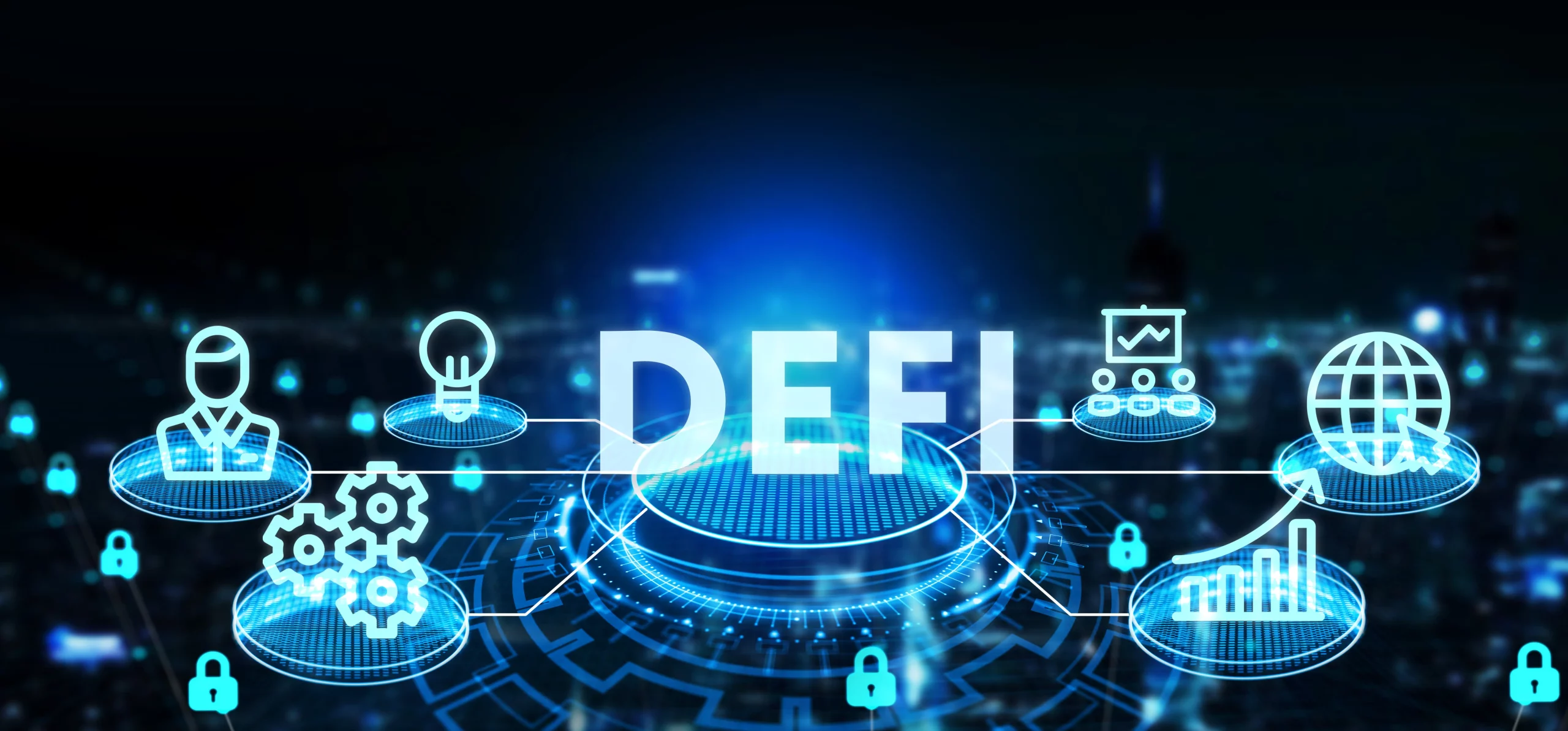
Decentralized Finance (DeFi) represents a revolutionary shift in how financial systems operate, offering the possibility of eliminating traditional intermediaries like banks, brokers, and insurance companies. Built on blockchain technology, DeFi platforms leverage smart contracts—self-executing code that automatically enforces terms of agreements—to provide various financial services such as lending, borrowing, trading, and insurance in a decentralized and transparent manner.
The DeFi ecosystem has grown exponentially in the past few years. According to DeFi Pulse, the total value locked (TVL) in DeFi platforms surpassed $100 billion in 2021, an increase of over 1,000% from 2020. This growth has attracted significant interest from both retail and institutional investors, allured by the promise of higher yields, lower fees, and increased financial sovereignty.
However, the rapid growth of DeFi has also exposed several vulnerabilities, particularly in areas such as security and regulation. As DeFi platforms handle increasingly larger amounts of capital and provide more complex financial products, they become attractive targets for hackers and exploiters. At the same time, the lack of established regulatory frameworks leaves investors and participants vulnerable to risks like fraud, market manipulation, and legal uncertainty.
This article will explore the core security issues in DeFi, highlight significant incidents of hacks and exploits, and analyze the regulatory landscape surrounding the DeFi space. By understanding the security and regulatory challenges, we can better appreciate the steps necessary to make DeFi a sustainable and safe part of the global financial ecosystem.
2. The Security Risks in DeFi
2.1 Vulnerabilities in Smart Contracts
The fundamental technology behind DeFi is smart contracts, self-executing agreements with the terms directly written into the blockchain code. Smart contracts automate the process of lending, borrowing, and trading, without the need for intermediaries. However, their very nature makes them susceptible to security flaws that can be exploited by malicious actors.
Smart contract vulnerabilities typically stem from coding errors, poor contract design, or flaws in the underlying protocols. In some cases, attackers have found ways to exploit these vulnerabilities to siphon funds from DeFi platforms.
Examples of Smart Contract Vulnerabilities:
- Reentrancy Attacks: This occurs when a smart contract makes an external call to another contract before updating its state, allowing an attacker to recursively call the contract and withdraw funds multiple times. A famous example of this was the DAO hack on Ethereum in 2016.
- Integer Overflow/Underflow: When a contract fails to properly handle large or small numbers, it can result in unintended behavior, such as draining funds or manipulating the system in unexpected ways.
- Logic Flaws: In some instances, poorly written smart contracts lack proper validation checks, enabling attackers to manipulate terms and extract assets.
2.2 High-Profile Hacks and Exploits
Despite the promises of trustless and secure systems, the DeFi space has seen a number of high-profile hacks and exploits that have exposed vulnerabilities in smart contract code and decentralized protocols. Some of the largest hacks in DeFi history have resulted in millions of dollars in stolen funds, causing a significant loss of investor confidence in the sector.
Notable DeFi Hacks and Exploits:
- The DAO Hack (2016): The DAO, a decentralized autonomous organization, was built on the Ethereum blockchain and aimed to act as a venture capital fund. A reentrancy attack led to the theft of over $60 million in Ether, which highlighted the risks of smart contracts with insufficient security.
- bZx Exploits (2020): bZx, a DeFi platform providing lending and margin trading, was exploited twice in 2020. The attacker manipulated the price oracles used by the platform, allowing them to borrow large sums of assets without adequate collateral.
- Poly Network Hack (2021): Poly Network, a cross-chain DeFi platform, suffered an exploit that resulted in the theft of over $600 million in assets. The hacker exploited a vulnerability in the platform’s cross-chain mechanism.
These incidents underscore the need for rigorous smart contract audits, improved coding practices, and better protocols to ensure that DeFi platforms remain secure. They also highlight the risk that attackers can exploit vulnerabilities before developers have the opportunity to patch them.
2.3 Flash Loan Attacks
Flash loans are a unique feature of DeFi platforms, where users can borrow large sums of cryptocurrency without any collateral, provided they return the funds in the same transaction. While they offer flexibility for users, flash loans can be used maliciously for price manipulation and arbitrage attacks.
In a typical flash loan attack, the attacker borrows a large sum of capital, manipulates prices on decentralized exchanges (DEXs), and then repays the loan, pocketing the profits from the manipulated asset prices. These attacks can destabilize DeFi markets and undermine trust in decentralized exchanges.
Platforms like Aave and dYdX that provide flash loans have introduced measures to limit the risk, such as transaction limits and monitoring for unusual patterns, but the risk remains inherent in the system.
3. Regulatory Challenges in DeFi
While the security risks in DeFi have been widely discussed, regulatory uncertainty remains one of the biggest hurdles facing the sector. Traditional financial markets are heavily regulated, with rules governing everything from capital requirements to investor protection. DeFi, on the other hand, operates without any central authority, raising questions about how it should be regulated, if at all.
3.1 The Lack of Regulatory Frameworks
DeFi platforms operate in a decentralized and pseudonymous environment, which makes it difficult for traditional regulators to enforce laws and regulations effectively. Unlike centralized financial institutions, DeFi protocols are typically governed by smart contracts on a blockchain, with no central entity responsible for compliance. This creates a challenge for regulators, who are unsure how to classify DeFi platforms and which laws should apply.
Key Regulatory Questions Include:
- Who is responsible for the operation of a decentralized protocol?
- How should DeFi platforms handle anti-money laundering (AML) and know-your-customer (KYC) requirements?
- Should decentralized protocols be subject to securities laws if they facilitate trading or provide financial services?
While some jurisdictions, like Switzerland and Singapore, have been more open to embracing DeFi by creating regulatory sandboxes or guidelines, others have taken a more cautious or even hostile stance. For example, in the United States, the Securities and Exchange Commission (SEC) has argued that certain DeFi tokens may be considered securities, subjecting them to existing securities laws.
3.2 The Potential for Legal Gray Areas
The lack of clear regulations creates a legal gray area for DeFi projects and investors. In some cases, regulators may view decentralized protocols as operating outside of the legal framework, potentially leading to enforcement actions or litigation.
A high-profile case is the MakerDAO ecosystem, which backs the stablecoin DAI. The U.S. Commodity Futures Trading Commission (CFTC) has scrutinized MakerDAO for its role in creating and managing a decentralized financial product, raising concerns about whether the platform should be classified as a futures market or a commodity.
Additionally, taxation of DeFi income remains a murky issue. Governments are still determining how to treat cryptocurrency-based income, including staking rewards, yield farming, and capital gains from DeFi platforms. In the absence of clear guidance, DeFi participants face uncertainty regarding their tax obligations.
3.3 Efforts to Address Regulatory Gaps
In response to these challenges, some DeFi platforms are taking proactive steps to introduce compliance measures. For example, platforms like Compound and Aave have implemented KYC and AML procedures to meet regulatory standards. Furthermore, regulatory bodies are beginning to engage with the DeFi community to understand the technology and identify ways to balance innovation with consumer protection.
Additionally, governments around the world are exploring new frameworks for regulating DeFi. The European Union’s MiCA (Markets in Crypto-Assets) Regulation is one such initiative that aims to create a comprehensive regulatory environment for crypto assets, including DeFi tokens and protocols. As DeFi matures, regulatory clarity will be essential for fostering trust and enabling institutional participation in the space.
4. Solutions and Future Directions
4.1 Smart Contract Audits and Security Enhancements
To address security risks, the DeFi community must invest in robust auditing processes. Independent auditing firms can conduct thorough reviews of smart contracts and identify vulnerabilities before they are deployed. Moreover, platforms should integrate bug bounty programs to encourage ethical hackers to report flaws and vulnerabilities.
DeFi projects should also adopt best practices such as formal verification—a mathematical approach to proving the correctness of smart contract code. By ensuring that contracts are error-free, the likelihood of exploits can be significantly reduced.
4.2 Establishing Clear Regulatory Frameworks
To overcome regulatory hurdles, it is essential for lawmakers and regulators to engage with the DeFi ecosystem and establish clear and consistent guidelines. This may include defining the legal status of DeFi tokens, addressing anti-money laundering (AML) concerns, and creating frameworks for decentralized exchanges. Collaboration between regulators and the DeFi community is crucial to strike a balance between innovation and consumer protection.
5. Conclusion: The Road Ahead for DeFi
DeFi represents the future of finance, offering greater accessibility, transparency, and efficiency. However, its rapid growth has exposed significant security vulnerabilities and regulatory uncertainties that must be addressed to ensure the long-term sustainability of the ecosystem. By strengthening smart contract security, improving auditing practices, and establishing regulatory clarity, DeFi can continue to evolve and mature into a trustworthy and widely adopted financial system.
As the DeFi space matures, it will likely undergo further innovations and developments. Ultimately, the intersection of blockchain technology, security, and regulation will determine whether DeFi can achieve its full potential and become a permanent fixture in the global financial system.