


































1. Introduction: The Rise of Blockchain in the Banking Sector
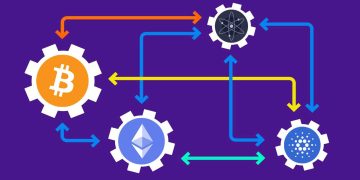
Blockchain technology, originally popularized by cryptocurrencies like Bitcoin, has evolved far beyond its initial scope. Today, it has become a transformative tool in enterprise solutions, particularly within the banking sector. In an era where financial institutions are grappling with challenges like operational inefficiencies, costly transaction fees, and slow processing times, blockchain offers promising solutions.
Enterprise blockchain, a permissioned version of blockchain designed for businesses, is being adopted by banks to streamline a wide range of financial services, including cross-border payments, clearing and settlement, and trade finance. The blockchain’s decentralized, transparent, and immutable nature makes it an attractive alternative to traditional centralized systems.
This article will explore how blockchain-based enterprise platforms are simplifying traditional banking processes. We will analyze their role in improving operational efficiencies, lowering costs, and enhancing security, alongside discussing how blockchain is reshaping financial services and the future trajectory of these technologies in the banking industry.
2. Traditional Banking Challenges and the Need for Blockchain Solutions
2.1 Legacy Systems and Operational Inefficiencies
Traditional banks have relied on legacy systems for decades to process financial transactions, manage accounts, and ensure the security of operations. While these systems have served their purpose, they come with several notable drawbacks:
- Complexity and Fragmentation: Traditional banking systems often involve multiple intermediaries (e.g., clearinghouses, correspondent banks, and custodians) in processing transactions, leading to complexity and delays.
- High Transaction Costs: Every intermediary in the transaction chain requires compensation, which drives up costs. For example, international money transfers involve significant fees due to the involvement of multiple banks and payment providers.
- Slow Processing Times: Traditional financial transactions, especially in cross-border payments, can take several days to settle. This is due to the time needed for reconciliation, clearing, and settlement across different banks and time zones.
- Security and Fraud Risks: Legacy systems can be vulnerable to security breaches, fraud, and errors in reconciliation. Despite advances in security protocols, manual processes and centralized databases still present opportunities for compromise.
2.2 The Need for Blockchain in Banking
Blockchain technology is seen as the solution to these challenges. By leveraging decentralized networks, blockchain eliminates the need for intermediaries, streamlines workflows, and enhances security. Blockchain enables real-time transaction processing and improves transparency while reducing fraud risks.
Key drivers for blockchain adoption in the banking sector include:
- Faster Transactions: Blockchain’s ability to process transactions in near real-time is a huge advantage over traditional systems, which often require days to settle international payments.
- Lower Costs: By cutting out intermediaries, blockchain reduces transaction fees and operational costs for banks and their customers.
- Enhanced Transparency: Blockchain’s immutable ledger provides a transparent record of all transactions, making it easier to trace and verify financial activities.
- Improved Security: The cryptographic nature of blockchain ensures that transactions are secure and resistant to tampering.
3. How Blockchain Simplifies Traditional Financial Transaction Processes
3.1 Blockchain in Cross-Border Payments
One of the most significant areas where blockchain is simplifying traditional financial transactions is cross-border payments. Traditionally, sending money across borders involves multiple intermediaries—such as correspondent banks—each charging fees and adding delays to the transaction. The process is also prone to errors and discrepancies, resulting in lengthy reconciliation processes.
By using blockchain for cross-border payments, banks can eliminate these intermediaries, allowing for direct transfers between parties. Blockchain’s ability to settle transactions in real time ensures that cross-border payments can be completed much faster—often in just a few minutes—while reducing transaction fees.
Example of Blockchain in Cross-Border Payments:
- Ripple: Ripple is a blockchain-based payment platform that enables fast, low-cost international money transfers. It allows financial institutions to process transactions in real time, bypassing traditional intermediaries like correspondent banks.
3.2 Blockchain in Clearing and Settlement
Clearing and settlement, the process through which banks ensure that transactions are accurately recorded and verified, is another area where blockchain brings value. Traditionally, this process involves multiple steps, including reconciliation and confirmation by different parties, which can take several days.
Blockchain’s distributed ledger allows banks to record transactions in real time, reducing the need for manual reconciliation and accelerating the settlement process. This has the potential to significantly improve the efficiency and speed of securities transactions, reducing settlement times from days to hours or even minutes.
Example of Blockchain in Clearing and Settlement:
- Project Ion by DTCC: The Depository Trust & Clearing Corporation (DTCC) has been experimenting with blockchain technology to enhance its clearing and settlement processes. The Project Ion initiative aims to reduce settlement times and improve operational efficiency using distributed ledger technology.
3.3 Blockchain in Trade Finance
Trade finance, the financing of goods and services across borders, often involves complex paperwork, long approval processes, and multiple intermediaries. Blockchain simplifies trade finance by providing a single platform for all participants—buyers, sellers, and banks—to access and update trade documents in real time.
Smart contracts, which are self-executing contracts with the terms of the agreement directly written into code, further streamline trade finance by automatically executing payment and delivery once certain conditions are met. This eliminates the need for intermediaries, reduces risks, and speeds up transactions.
Example of Blockchain in Trade Finance:
- We.trade: We.trade is a blockchain-based trade finance platform that simplifies cross-border trade by providing a digital ecosystem for real-time tracking of documents, enabling secure and efficient transactions between buyers, sellers, and financial institutions.

4. Key Benefits of Blockchain in Banking Transactions
4.1 Cost Reduction
Blockchain eliminates intermediaries from the financial transaction process, leading to lower transaction fees. For example, the use of blockchain in cross-border payments has the potential to significantly reduce the high fees associated with international wire transfers.
Additionally, by automating processes like clearing and settlement and trade finance through smart contracts, blockchain reduces the need for manual intervention and costly administrative tasks, further cutting operational costs.
4.2 Increased Efficiency
Blockchain can process transactions in near real-time, improving the efficiency of financial services like payments, clearing, and settlement. The technology reduces delays associated with traditional methods, making it possible for financial transactions to be completed almost instantly, even across borders.
By automating key tasks through blockchain, banks also reduce the time spent on reconciliation, compliance checks, and other routine processes.
4.3 Enhanced Security and Transparency
Blockchain’s decentralized, cryptographic nature ensures that all transactions are secure and cannot be tampered with. Once a transaction is recorded on the blockchain, it becomes immutable and transparent, providing a secure, tamper-proof record for all participants to access.
This transparency is crucial in industries like trade finance, where multiple parties need to verify the authenticity of trade documents and transactions.
5. Challenges in Blockchain Adoption in the Banking Sector
Despite the many advantages, the adoption of blockchain in the banking sector faces several challenges:
- Regulatory Uncertainty: Blockchain technology is still relatively new, and many countries have not yet developed clear regulatory frameworks. Banks need to navigate uncertain legal environments and ensure that blockchain solutions comply with existing financial regulations, such as KYC (Know Your Customer) and AML (Anti-Money Laundering) requirements.
- Integration with Legacy Systems: Many banks still rely on legacy systems that are not compatible with blockchain. Integrating blockchain into these systems can be complex and costly.
- Scalability: While blockchain offers faster transactions than traditional systems, scalability remains an issue. Blockchain networks need to handle large transaction volumes without sacrificing performance or security.
6. The Future of Blockchain in Banking
As enterprise blockchain technology matures, its adoption within the banking sector is expected to grow. The benefits of blockchain in reducing costs, enhancing efficiency, and improving security are too significant for financial institutions to ignore. As more banks begin to experiment with and adopt blockchain-based platforms, the financial ecosystem will continue to evolve, creating new opportunities for innovation.
In the future, blockchain could play an even larger role in transforming the global financial landscape, creating a more transparent, secure, and efficient system that benefits both financial institutions and their customers.
Conclusion
The growing adoption of enterprise blockchain platforms by banks is helping to simplify traditional financial transaction processes, offering benefits in terms of cost reduction, efficiency, security, and transparency. While challenges such as regulatory uncertainty and integration with legacy systems remain, the potential of blockchain to transform the banking sector is undeniable. As the technology continues to mature, we can expect an even greater shift toward blockchain-driven solutions in financial services, heralding a new era of innovation in global finance.