



































Introduction
Bitcoin, the world’s first and most recognized cryptocurrency, has served as the cornerstone of the digital asset revolution since its inception in 2009. Over the years, its dominance within the cryptocurrency market has been a subject of intense scrutiny and analysis. Bitcoin’s market dominance, which refers to the percentage of the total cryptocurrency market capitalization represented by Bitcoin, has long been considered a key indicator of the overall health and direction of the digital asset ecosystem.
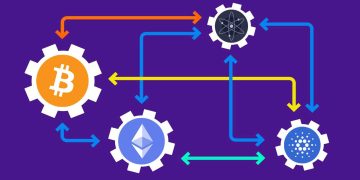
However, as the cryptocurrency market matures, the role and dominance of Bitcoin are changing. The rise of altcoins—alternative cryptocurrencies to Bitcoin—such as Ethereum, Binance Coin, and Solana has diversified the market, leading to shifts in market dynamics. The evolving dominance of Bitcoin not only provides insights into the growth and adoption of the cryptocurrency market but also signals broader economic and technological trends.
This article will examine the changes in Bitcoin’s market dominance, explore the factors driving these shifts, and analyze how the evolving landscape of cryptocurrency affects the market as a whole. We will also investigate how investors, analysts, and institutions interpret Bitcoin’s dominance and its implications for the future of digital currencies.
Chapter 1: Understanding Bitcoin’s Market Dominance
1.1. What is Bitcoin Market Dominance?
Bitcoin’s market dominance is a metric that compares the market capitalization of Bitcoin to the total market capitalization of all cryptocurrencies combined. The calculation is simple: Bitcoin Market Dominance=Bitcoin Market CapTotal Cryptocurrency Market Cap×100\text{Bitcoin Market Dominance} = \frac{\text{Bitcoin Market Cap}}{\text{Total Cryptocurrency Market Cap}} \times 100Bitcoin Market Dominance=Total Cryptocurrency Market CapBitcoin Market Cap×100
Market capitalization is determined by multiplying the price of a cryptocurrency by the total circulating supply. Bitcoin’s market dominance, therefore, reflects its proportionate size relative to the entire cryptocurrency ecosystem.
Historically, Bitcoin has maintained a market dominance of over 50% for most of its existence. However, as the market for digital assets has grown, this dominance has fluctuated, especially with the rise of altcoins—cryptocurrencies other than Bitcoin—that have garnered increasing interest from investors, developers, and users.
1.2. Why is Bitcoin’s Market Dominance Important?
Bitcoin’s market dominance serves as an indicator of several key aspects of the cryptocurrency market:
- Investor Sentiment: When Bitcoin’s dominance is high, it typically signals that investors are more confident in Bitcoin as a store of value or safe haven asset. Conversely, a declining dominance may suggest that market participants are diversifying into altcoins, which may be perceived as offering higher risk but potentially higher returns.
- Market Health: Bitcoin’s market dominance reflects the relative health of the market. A drop in dominance may signal that altcoins are gaining traction, often due to increased innovation or more favorable market conditions. It can also indicate that Bitcoin is losing its appeal as the leading digital asset.
- Liquidity and Trading Volume: Bitcoin has historically commanded the largest share of cryptocurrency trading volume. As Bitcoin’s dominance shifts, liquidity in the altcoin market may increase, leading to more active trading across a broader spectrum of digital assets.
1.3. Historical Trends in Bitcoin Market Dominance
Over the years, Bitcoin’s market dominance has experienced notable fluctuations. When Bitcoin first emerged, it was the only cryptocurrency, and its dominance was naturally 100%. As other cryptocurrencies began to enter the market, Bitcoin’s share started to decrease, but it remained the leader by a significant margin.
The following are some key periods in Bitcoin’s dominance:
- 2013-2017: Bitcoin’s dominance remained relatively high during these years, often above 80%. However, the rise of Ethereum and other altcoins started to chip away at this dominance, especially during the boom in ICOs (Initial Coin Offerings) in 2017.
- 2017-2018: In the lead-up to the 2017 cryptocurrency bull market, Bitcoin’s dominance began to decrease as Ethereum, Ripple (XRP), and other altcoins surged in popularity. During this period, Bitcoin’s dominance dropped below 40%, while altcoins like Ethereum and Litecoin captured significant market share.
- 2019-2021: Bitcoin’s dominance fluctuated between 60% and 70% as the cryptocurrency market matured. Ethereum’s growing presence, along with the launch of decentralized finance (DeFi) applications and NFTs (non-fungible tokens), provided competition for Bitcoin’s supremacy.
1.4. Key Factors Influencing Bitcoin’s Market Dominance
Several factors contribute to changes in Bitcoin’s market dominance. Some of the most significant factors include:
- Innovation in Altcoins: The development of innovative technologies by altcoin projects has often resulted in shifts in dominance. Ethereum, for example, introduced the concept of smart contracts and the broader decentralized finance (DeFi) ecosystem, allowing it to capture significant market share.
- Bitcoin’s Institutional Adoption: Bitcoin has increasingly been adopted by institutional investors, hedge funds, and corporations as a store of value and hedge against inflation. This growing institutional interest has helped stabilize Bitcoin’s dominance, especially during periods of economic uncertainty.
- DeFi and NFTs: The rise of decentralized finance (DeFi) and NFTs has driven significant growth in the broader cryptocurrency ecosystem. As investors flock to platforms like Uniswap, Aave, and Compound, or engage with NFT platforms like OpenSea, the market share of altcoins has increased, thereby decreasing Bitcoin’s dominance.
- Regulatory Developments: Regulatory developments in key markets, particularly in the U.S. and China, have had a profound impact on Bitcoin’s dominance. News about regulatory crackdowns or favorable regulations can lead to shifts in investor behavior, often affecting Bitcoin’s dominance.

Chapter 2: Factors Contributing to Shifts in Bitcoin’s Dominance
2.1. The Rise of Ethereum and Smart Contracts
Since its inception in 2015, Ethereum has played a pivotal role in reshaping the cryptocurrency landscape. Ethereum introduced smart contracts, which are self-executing contracts with the terms of the agreement directly written into code. This development paved the way for a wide array of decentralized applications (dApps), decentralized finance (DeFi) projects, and NFTs.
- Ethereum’s Smart Contract Platform: Ethereum’s ability to enable the creation of decentralized applications has led to a significant increase in its market share. Ethereum’s market dominance has often seen fluctuations in tandem with the rise of DeFi protocols (such as Uniswap, MakerDAO, and Aave) that are built on its blockchain.
- Layer-2 Solutions and Ethereum 2.0: Ethereum’s scalability issues, particularly high transaction fees, have spurred the development of Layer-2 solutions like Polygon and the transition to Ethereum 2.0, a major upgrade aimed at improving transaction throughput. These developments could further enhance Ethereum’s dominance as it becomes more scalable and efficient.
2.2. The Impact of DeFi and NFTs on the Altcoin Market
The explosive growth of decentralized finance (DeFi) and NFTs has significantly affected Bitcoin’s market dominance. DeFi projects aim to create decentralized versions of traditional financial services, including lending, borrowing, and trading. Many DeFi protocols are built on Ethereum and other altcoin platforms.
- DeFi Ecosystem Growth: The DeFi boom in 2020 and 2021 led to a surge in altcoin market capitalization, as Ethereum and other blockchain platforms gained popularity for enabling decentralized financial services. With billions of dollars locked in DeFi protocols, altcoins such as Chainlink (LINK), Aave, and Uniswap (UNI) have become major players, diluting Bitcoin’s dominance.
- NFT Explosion: The rise of NFTs (non-fungible tokens) has also shifted the market, particularly in 2021. NFTs, which are unique digital assets representing ownership of digital or physical items, are primarily traded on Ethereum. As the NFT market boomed, Ethereum and other altcoins saw significant growth, reducing Bitcoin’s market share.
2.3. Institutional Adoption and Bitcoin as Digital Gold
While altcoins have gained prominence, Bitcoin’s status as “digital gold” has become more solidified with growing institutional interest. Bitcoin is increasingly being seen not just as a medium of exchange but as a store of value, akin to gold. The influx of institutional capital into Bitcoin, driven by the Bitcoin Investment Trust, MicroStrategy, and Tesla, has helped Bitcoin maintain a relatively high level of dominance, particularly during times of economic uncertainty.
- Hedge Against Inflation: Bitcoin’s fixed supply of 21 million coins has made it an attractive asset for investors looking to hedge against inflation, especially in the wake of the COVID-19 pandemic and government stimulus programs. This narrative has bolstered Bitcoin’s appeal and helped it maintain its market leadership, even as altcoins continue to proliferate.
- Corporate Adoption: In 2020 and 2021, several major companies began adding Bitcoin to their balance sheets, marking a significant shift in how institutions view Bitcoin. This institutional adoption further cemented Bitcoin’s dominance as the leading cryptocurrency.
2.4. Regulatory Developments and Market Sentiment
Regulation has also played a major role in shaping Bitcoin’s dominance. Regulatory news can significantly impact investor sentiment and trading behavior, causing shifts in market dominance.
- Regulatory Crackdowns: In countries like China, which has had periodic crackdowns on cryptocurrency mining and trading, Bitcoin’s price and dominance have taken a hit. In contrast, positive regulatory developments in countries such as El Salvador, which made Bitcoin legal tender, have been seen as bullish for Bitcoin and its dominance.
- Regulatory Uncertainty: In the U.S., regulatory uncertainty around the treatment of cryptocurrencies—especially whether certain tokens should be classified as securities—has contributed to fluctuating dominance. A clear regulatory framework could lead to more institutional adoption of Bitcoin, while unclear or restrictive regulations may shift interest toward altcoins.
Chapter 3: Implications of Changing Bitcoin Dominance
3.1. Impacts on Investor Behavior
Bitcoin’s market dominance influences investor behavior in several ways:
- Risk Appetite: As Bitcoin’s dominance decreases, investors may feel more comfortable exploring altcoins, especially those with higher growth potential. Conversely, when Bitcoin’s dominance rises, it may signal that investors are seeking stability in the cryptocurrency market, preferring Bitcoin over riskier altcoins.
- Diversification: Shifting dominance often encourages market participants to diversify their holdings. For instance, when Bitcoin dominance falls, investors may look to allocate more funds in altcoins or diversified portfolios containing both Bitcoin and various altcoins.
3.2. The Role of Bitcoin as a Gateway to the Crypto Market
Despite the rise of altcoins, Bitcoin remains the dominant entry point into the cryptocurrency market. Many investors, particularly institutional ones, see Bitcoin as the safest and most liquid cryptocurrency, offering a gateway for further exposure to the market.
- Institutional Onboarding: Bitcoin’s prominence in the cryptocurrency space has made it the primary asset for institutions entering the market. As Bitcoin’s market dominance fluctuates, its role as a liquid and trusted digital asset continues to attract new capital from traditional financial institutions.
Conclusion
The shifting dominance of Bitcoin in the cryptocurrency market is a key indicator of broader trends within the space. From its early days as the sole cryptocurrency to its current position amidst a sea of innovative altcoins, Bitcoin has maintained a complex relationship with the rest of the market. Its dominance is influenced by numerous factors, including technological advancements, institutional adoption, regulatory environments, and market sentiment.
As the cryptocurrency ecosystem continues to mature, Bitcoin’s role as the dominant player may evolve, but its foundational position in the market is unlikely to be displaced in the near future. For investors, analysts, and market participants, understanding Bitcoin’s market dominance is crucial for navigating the cryptocurrency landscape and anticipating the potential impact of shifting market dynamics. As the industry grows, Bitcoin’s dominance will remain a bellwether for the health and trajectory of the broader cryptocurrency market.