































1. Introduction
Blockchain technology has emerged as one of the most transformative innovations of the 21st century. It offers a decentralized, immutable ledger system that can record and verify transactions transparently, without the need for intermediaries. This transparency is one of the key benefits that makes blockchain technology attractive to many industries, including finance, supply chain, and governance.
However, this transparency can often conflict with the need for privacy, particularly in industries like finance, healthcare, and identity management, where personal and sensitive data must be protected. Privacy on the blockchain has been a contentious issue, with many questioning how personal data can be protected in a system that is inherently transparent.
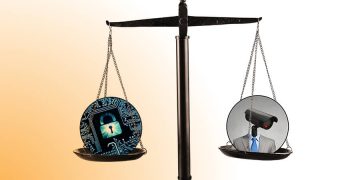
The ongoing challenge is to balance the transparency of blockchain with the need for privacy. While transparency offers trust, accountability, and auditability, privacy is necessary for confidentiality, data protection, and compliance with regulatory frameworks like GDPR. This article explores the technical measures that can be implemented to address the balance between these two needs and the challenges they present.
2. The Importance of Transparency in Blockchain
Blockchain’s transparency is one of its most celebrated features. Every transaction recorded on a blockchain is publicly accessible, and the history of all transactions can be verified by any user. This transparency ensures several advantages:
2.1 Auditability and Accountability
The transparency of blockchain allows for any party to audit transactions in real-time. This provides a significant improvement over traditional financial systems, where transactions may be hidden or delayed, leading to mistrust. For businesses and financial institutions, blockchain’s transparency facilitates accountability, as all parties involved in a transaction can trace its flow.
2.2 Elimination of Intermediaries
Blockchain removes the need for centralized intermediaries like banks, notaries, or payment processors, which are typically used to validate transactions. Instead, smart contracts and consensus mechanisms handle transaction verification, reducing the risk of fraud or manipulation.
2.3 Decentralization and Trustless Systems
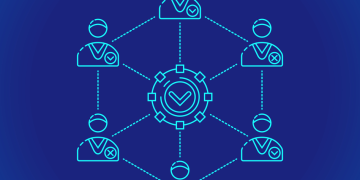
The transparency of blockchain helps to build trust in a decentralized system. Because data on the blockchain is distributed across many nodes, it is difficult for any single entity to alter or manipulate it. This ensures that the system operates without the need for centralized authorities.
2.4 Public Verification
Anyone can verify transactions on the blockchain, which ensures that the network is transparent and can be trusted. This level of openness supports more equitable systems, where power is distributed, and no one party can manipulate data.
However, despite the numerous advantages, transparency can sometimes pose risks, especially when it involves sensitive or personal data. This is where privacy concerns become relevant.
3. The Need for Privacy in Blockchain
3.1 Protecting Personal and Sensitive Data
In many blockchain use cases, particularly in industries like finance and healthcare, privacy is essential. Personal data, financial transactions, and medical records must remain confidential to protect individuals’ rights. Blockchain’s transparent nature often conflicts with the requirement to keep such data private.
3.2 Regulatory Requirements
Privacy is also necessary for compliance with various legal frameworks. In Europe, for example, the General Data Protection Regulation (GDPR) mandates that individuals have the right to control their personal data. Blockchain systems that expose personal data to the public may violate these regulations unless they incorporate robust privacy features.
3.3 Data Ownership
Blockchain aims to give users control over their own data. However, if all data on the blockchain is public, individuals may lose control over who accesses and uses their personal information. Privacy features are necessary to empower individuals to manage and protect their data effectively.
3.4 Preventing Financial Crimes
Blockchain’s transparency, while useful for tracking illicit transactions, also exposes legitimate users to the risk of being targeted by malicious actors. For example, if a user’s financial activity is fully visible on the blockchain, it could become vulnerable to social engineering attacks, fraud, or theft.

4. Technological Methods for Balancing Transparency and Privacy
To address the tension between transparency and privacy, blockchain developers have proposed and implemented several technological solutions. Below are the key technologies that aim to maintain this delicate balance:
4.1 Zero-Knowledge Proofs (ZKPs)
One of the most promising techniques to balance transparency and privacy is Zero-Knowledge Proofs (ZKPs). A Zero-Knowledge Proof is a cryptographic method that allows one party to prove to another that they know a value (e.g., a password or transaction details) without revealing the value itself.
In the blockchain context, ZKPs can enable users to prove the validity of transactions without exposing sensitive data. For instance, a user could prove they have sufficient funds to complete a transaction without revealing the exact amount of funds in their wallet.
ZKPs provide several benefits:
- Privacy: Users can maintain privacy by keeping sensitive information hidden while still providing verifiable evidence of the correctness of a transaction.
- Scalability: ZKPs can also be used to improve the scalability of blockchain systems, as they allow transactions to be processed in a more efficient manner.
Popular examples of ZKP applications include zk-SNARKs (Zero-Knowledge Succinct Non-Interactive Arguments of Knowledge), which are used in privacy-centric cryptocurrencies like Zcash.
4.2 Confidential Transactions
Confidential transactions, particularly used in cryptocurrencies like Monero and Zcash, allow transaction amounts to be hidden while still maintaining the integrity of the transaction. These transactions are verified without revealing sensitive information, ensuring that both transparency and privacy are maintained.
Confidential transactions rely on advanced cryptographic techniques, such as ring signatures and elliptic curve cryptography, to obfuscate transaction details. These systems allow for the auditability of the blockchain while preventing the leakage of private information.
4.3 Privacy-Preserving Smart Contracts
While traditional smart contracts are transparent and public, privacy-preserving smart contracts integrate cryptographic techniques to ensure that sensitive data is protected. These contracts ensure that certain data, such as the terms of a deal or confidential business logic, is kept private, while the transaction itself remains transparent and verifiable.
Privacy-preserving smart contracts can be implemented using secure multi-party computation (sMPC) and other cryptographic techniques that allow multiple parties to compute data together while keeping the inputs and outputs private.
4.4 Layer-2 Solutions
Layer-2 scaling solutions, such as Optimistic Rollups and zk-Rollups, can help reduce the on-chain data footprint while improving both privacy and scalability. By offloading computation to a secondary layer, these solutions allow for the encryption of data before it is stored on the main blockchain, ensuring privacy without sacrificing transparency.
In addition to privacy, Layer-2 solutions improve the overall performance of blockchain networks, making them more scalable while preserving the integrity of the main chain.
5. Real-World Applications of Privacy and Transparency Balance
5.1 DeFi and Financial Systems
In the DeFi space, privacy is crucial for protecting users’ financial data while maintaining transparency about the overall system’s health. By using ZKPs, confidential transactions, and other privacy-preserving technologies, DeFi platforms can allow users to interact with the system without exposing sensitive financial information, all while ensuring the system remains transparent and auditable.
5.2 Healthcare and Personal Data Management
Blockchain can be used in healthcare for secure and transparent medical record management. However, given the sensitivity of medical data, privacy is paramount. Using privacy-preserving technologies like ZKPs, blockchain can ensure that patients’ medical histories are verifiable but not publicly disclosed.
5.3 Identity Management and Digital Privacy
With blockchain’s potential for digital identity management, there is a need to balance the transparency of the ownership and use of identities with the privacy of individuals’ personal details. Privacy-preserving technologies, such as decentralized identifiers (DIDs), can ensure that individuals can control their identities without exposing personal information to third parties.
6. Regulatory Considerations and Legal Implications
Governments and regulatory bodies are beginning to focus on blockchain privacy, especially in light of global privacy laws like GDPR. Striking the right balance between transparency and privacy will be critical for ensuring blockchain systems comply with existing and future regulations.
7. Challenges and Trade-offs in Balancing Privacy and Transparency
Achieving a balance between transparency and privacy involves several challenges:
- Scalability: Implementing privacy-preserving technologies can increase computational overhead and slow down blockchain performance.
- Complexity: Privacy features can make blockchain systems more complex and difficult for non-technical users to understand.
- Regulatory Compliance: Ensuring compliance with regulations like GDPR while maintaining privacy and transparency is a delicate balancing act.
8. The Future of Blockchain Privacy and Transparency
The future of blockchain privacy will likely involve further development of cryptographic techniques, such as advanced ZKPs and homomorphic encryption. As these technologies mature, blockchain networks will be able to offer more robust privacy protections while maintaining transparency and auditability.
9. Conclusion
Finding a balance between transparency and privacy in blockchain technology is an ongoing challenge, but technological advancements in cryptography and blockchain design are offering innovative solutions. By leveraging tools like Zero-Knowledge Proofs, confidential transactions, and privacy-preserving smart contracts, blockchain systems can maintain their transparent and trustless nature while protecting the privacy of users and sensitive data.
As the blockchain ecosystem continues to evolve, the balance between transparency and privacy will remain a central issue, driving further innovation and adaptation in this transformative technology.