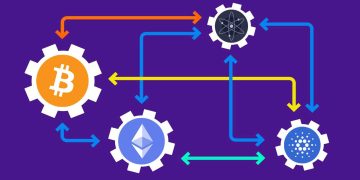




































1. Introduction: The Importance of Cross-Chain Interoperability
Blockchain technology has revolutionized industries by enabling decentralized, secure, and transparent transactions. However, while blockchain offers numerous benefits, one of its key limitations has been the inability to communicate across different networks. Initially, blockchain ecosystems were isolated—each blockchain operated in its own silo. As a result, assets and data held on one blockchain could not easily interact with assets and data on another blockchain. This fragmentation has hindered the full potential of blockchain applications, especially in areas such as decentralized finance (DeFi), where real-time cross-chain asset transfers and data sharing are essential.
Cross-chain interoperability refers to the ability of different blockchain networks to communicate, exchange data, and transfer assets in a secure, seamless, and trustless manner. Achieving true interoperability is critical for scaling blockchain technology and enabling the next wave of decentralized applications (dApps) that can operate across multiple blockchain platforms.
This article delves into the concept of cross-chain interoperability, exploring the reasons why it is crucial for the blockchain space, the challenges that developers face in implementing it, and the innovative solutions that are being proposed to overcome these challenges.
2. Why Cross-Chain Interoperability Matters
2.1 Enabling DeFi and Multi-Blockchain Ecosystems
Decentralized finance (DeFi) has exploded in popularity over the past few years, providing users with a new way to access financial services without relying on traditional intermediaries like banks. However, DeFi protocols have largely been siloed within specific blockchain ecosystems like Ethereum, Binance Smart Chain, or Polkadot. Cross-chain interoperability plays a key role in enabling DeFi applications to operate across multiple blockchain networks, allowing users to access a wider variety of assets, liquidity pools, and decentralized financial services.
Without interoperability, users and developers would be limited to the assets and services of a single blockchain ecosystem. This would significantly reduce the effectiveness of DeFi protocols and limit the growth of the decentralized economy.
2.2 Expanding Blockchain Use Cases
Beyond DeFi, blockchain is being explored for a wide range of applications, from supply chain management and voting systems to healthcare and identity management. Cross-chain interoperability is necessary for these applications to work across multiple blockchains, allowing different blockchain networks to share data and execute transactions without centralized intermediaries.
In the context of supply chain management, for example, interoperability between different blockchain systems can provide end-to-end visibility and verification of goods as they move through the supply chain. This is crucial for ensuring data accuracy, traceability, and transparency across multiple entities, each of which may be using different blockchain networks.
2.3 Improving Blockchain Scalability and Redundancy
Blockchain scalability is one of the most pressing issues facing the technology today. Many blockchain networks, particularly those based on Proof of Work (PoW) consensus mechanisms like Bitcoin, struggle to handle large volumes of transactions at scale. Cross-chain interoperability can help alleviate this issue by allowing assets and data to be distributed across different blockchains, improving the overall throughput of the ecosystem.
Additionally, cross-chain interoperability can enhance the redundancy of blockchain systems. If one blockchain network becomes congested or experiences downtime, assets can be transferred to another blockchain, ensuring that users can still access decentralized services without interruption.
3. The Challenges of Cross-Chain Interoperability
3.1 Technical Complexity
One of the most significant challenges of achieving cross-chain interoperability is the technical complexity involved in ensuring that different blockchains can communicate with each other. Each blockchain has its own unique consensus mechanism, transaction structure, and smart contract platform, making it difficult to create a unified system for interoperability.
For example, Ethereum uses a Proof of Stake (PoS) consensus mechanism, while Bitcoin relies on Proof of Work (PoW). Even if two blockchains agree on a common protocol for cross-chain communication, the difference in their underlying consensus mechanisms creates complications in achieving real-time, secure, and reliable communication between the networks.
3.2 Security Risks
Interoperability introduces potential security risks, particularly when assets are transferred between blockchains. If a user transfers an asset from one blockchain to another, there is a risk that the transaction may be delayed or intercepted, leading to a loss of assets or data.
To mitigate these risks, cross-chain communication protocols must be designed with strong security measures, such as cryptographic techniques, multisignature wallets, and automated smart contracts. However, ensuring the security of cross-chain transactions is a complex task, particularly when dealing with decentralized networks where there is no central authority to monitor or enforce the transfer.
3.3 Standardization Issues
Another challenge of cross-chain interoperability is the lack of standardized protocols for communication between blockchains. While many blockchain networks have their own proprietary solutions for cross-chain communication, there is no universally accepted standard that facilitates interoperability between all blockchains.
The absence of a common standard makes it difficult to create universal tools and protocols that work across different blockchain platforms. This issue is further compounded by the rapid pace of innovation in the blockchain space, with new blockchain networks and technologies constantly emerging. Developing and agreeing on a set of interoperability standards will require coordination between multiple blockchain projects, developers, and industry stakeholders.
3.4 Governance and Consensus
Governance and consensus mechanisms vary significantly between different blockchains, and this disparity can complicate efforts to create cross-chain interoperability. Each blockchain has its own set of rules for validating transactions, ensuring security, and making changes to the network. Coordinating these governance models across multiple blockchains presents a challenge, as there may be conflicting interests, incentives, or priorities.
For instance, a blockchain network may prioritize decentralization and censorship resistance, while another may focus on scalability and speed. Achieving interoperability between these networks requires reconciling these different priorities and ensuring that each blockchain’s governance system can function effectively in a cross-chain environment.

4. Solutions to Enable Cross-Chain Interoperability
4.1 Atomic Swaps
One of the earliest solutions proposed for cross-chain interoperability is the concept of atomic swaps. Atomic swaps allow users to exchange assets between two different blockchains without the need for an intermediary, such as a centralized exchange. Atomic swaps rely on smart contracts to ensure that the transaction is completed only if both parties meet the terms of the agreement.
For example, if a user wants to exchange Bitcoin for Ethereum, the atomic swap will lock the assets in a smart contract, and the transaction will only be completed if both parties can prove that they have completed the swap. This approach is trustless, meaning that neither party needs to trust a third-party intermediary to execute the transaction.
4.2 Cross-Chain Bridges
Cross-chain bridges are one of the most widely used solutions for achieving interoperability. A cross-chain bridge acts as an intermediary between two different blockchain networks, allowing assets to be transferred from one blockchain to another.
These bridges typically use smart contracts to lock the assets on one chain and issue a corresponding amount of tokens on the other chain. The bridge ensures that the assets are transferred securely, and that the transaction is validated by both blockchains. Cross-chain bridges are particularly popular in DeFi applications, where users need to transfer assets between different networks to access various liquidity pools and trading pairs.
However, cross-chain bridges are not without risks. If a bridge is compromised, attackers could potentially steal users’ assets or disrupt the transfer process. As a result, securing cross-chain bridges with strong cryptographic techniques and ensuring the reliability of the underlying smart contracts is essential.
4.3 Interoperability Protocols
Several blockchain projects are developing interoperability protocols to standardize communication between different blockchains. These protocols provide a set of rules and standards that enable blockchains to communicate with each other securely and efficiently.
- Polkadot: Polkadot is one of the leading projects in the space of blockchain interoperability. It uses a relay chain and parachains to connect different blockchains and enable communication between them. The relay chain provides the shared security and consensus layer, while parachains are individual blockchains that can communicate with each other through the relay chain.
- Cosmos: Cosmos is another prominent project focused on enabling cross-chain interoperability. The Cosmos Network uses the Inter-Blockchain Communication (IBC) protocol, which allows different blockchains to exchange information and assets in a secure and scalable way. IBC enables cross-chain communication through a standardized messaging protocol, which ensures that different blockchains can interact without relying on centralized intermediaries.
- Wanchain: Wanchain is a blockchain platform that aims to provide interoperability between various blockchain ecosystems, including Ethereum, Bitcoin, and private chains. Wanchain’s cross-chain solution uses secure multi-party computation (MPC) and other advanced cryptographic techniques to enable trustless and secure cross-chain transactions.
4.4 Decentralized Cross-Chain Protocols
In addition to centralized solutions like bridges, decentralized protocols are emerging as a way to facilitate cross-chain interoperability. These decentralized protocols remove the need for a single intermediary, allowing assets and information to be exchanged directly between different blockchains.
Examples of decentralized cross-chain protocols include:
- Thorchain: Thorchain is a decentralized liquidity protocol that allows for cross-chain asset swaps between blockchains like Bitcoin, Ethereum, and Binance Smart Chain. Thorchain utilizes a system of liquidity pools to enable decentralized swaps between various digital assets.
- Ren Protocol: Ren Protocol enables interoperability between different blockchain ecosystems by providing decentralized access to assets like Bitcoin, Zcash, and others on Ethereum. Ren uses secure multi-party computation (MPC) to create “wrapped” versions of assets, allowing users to transact on non-native blockchains without relying on custodial solutions.
5. Conclusion: The Future of Cross-Chain Interoperability
Cross-chain interoperability is no longer a luxury for blockchain applications; it is a necessity. As the blockchain ecosystem continues to grow, the need for seamless, secure communication between different networks will only become more critical. The solutions outlined in this article—atomic swaps, cross-chain bridges, interoperability protocols, and decentralized cross-chain networks—offer promising ways to address the challenges of interoperability and unlock the full potential of blockchain technology.
While there are still significant technical, security, and governance challenges to overcome, the future of cross-chain interoperability looks bright. As blockchain projects continue to collaborate and innovate, it is likely that we will see a more interconnected and scalable blockchain ecosystem capable of supporting a wide range of use cases across industries. For DeFi, supply chain management, healthcare, and beyond, cross-chain interoperability will be the key to unlocking the true power of blockchain technology in the coming years.