


































1. Introduction: The Scalability Paradox in Blockchain Technology
Blockchain technology has revolutionized various sectors, including finance, supply chain management, healthcare, and government, by offering a decentralized, transparent, and secure method of recording transactions. However, despite its success and widespread adoption, scalability remains one of the most significant challenges facing blockchain networks.
The scalability problem arises from the limited transaction throughput and the latency involved in reaching consensus across a distributed network. As the number of users and transactions increases, the network’s ability to handle high volumes of concurrent transactions deteriorates, leading to slower processing times, higher fees, and the potential for network congestion.
The growth of decentralized applications (dApps) and enterprise-level blockchain use cases further magnifies these scalability challenges. Industries like financial services, logistics, and gaming, where high concurrency and large-scale transactions are critical, require blockchain networks capable of handling thousands, if not millions, of transactions per second (TPS). Unfortunately, most existing blockchain systems—such as Bitcoin and Ethereum—are not equipped to meet these demands efficiently.
This article aims to examine the core scalability issues of blockchain technology, analyze the root causes of performance bottlenecks, and explore ongoing solutions to scale blockchain networks effectively.
2. Understanding Blockchain Scalability: The Key Performance Metrics
Scalability in blockchain refers to the ability of the network to handle an increasing number of transactions efficiently without degrading its performance. To fully understand scalability, it is essential to define the key metrics that determine blockchain performance:
2.1 Transaction Throughput
Transaction throughput refers to the number of transactions a blockchain can process within a given time frame, often measured in transactions per second (TPS). High throughput is crucial for applications like financial services, supply chain management, and other real-time use cases.
For instance, Bitcoin can process only around 7 TPS, and Ethereum can handle about 30 TPS. In comparison, traditional financial networks, such as Visa, can process more than 24,000 TPS, highlighting the disparity between blockchain networks and centralized systems in terms of transaction volume.
2.2 Latency
Latency refers to the time it takes for a transaction to be processed and confirmed by the blockchain network. Low latency is crucial in high-concurrency environments where users demand near-instant transaction confirmation.
A high-latency blockchain network can lead to slow transaction finality, increased waiting times, and an overall poor user experience, especially in applications like trading platforms, gaming, and other real-time applications.
2.3 Decentralization and Security
While scalability is crucial, decentralization and security are two of blockchain’s most significant advantages. Striking a balance between scalability, decentralization, and security is often referred to as the “Blockchain Trilemma,” where enhancing one aspect often compromises the other two. For example, increasing transaction throughput and lowering latency often requires reducing the number of nodes or validators involved in the consensus process, which could lead to centralization and reduced security.
Blockchain networks must ensure that scalability improvements do not come at the expense of the network’s decentralization or its ability to resist attacks.
3. The Root Causes of Scalability Issues in Blockchain Networks
The scalability problem in blockchain networks is a complex issue arising from several interconnected factors. To address scalability challenges effectively, it is crucial to identify and understand these underlying causes.
3.1 Consensus Mechanism Limitations
Most traditional blockchains rely on consensus mechanisms like Proof of Work (PoW) or Proof of Stake (PoS) to validate transactions and secure the network. While these mechanisms ensure decentralized control, they also introduce performance bottlenecks.
- Proof of Work (PoW): In PoW systems, miners compete to solve complex cryptographic puzzles, consuming significant computational power and energy. This limits the number of transactions that can be processed per block and increases latency. Bitcoin’s PoW-based consensus allows only seven transactions per second, which is insufficient for handling high-concurrency, large-scale applications.
- Proof of Stake (PoS): PoS is often seen as a more scalable alternative to PoW because it replaces mining with staking, where validators are chosen to propose blocks based on the amount of cryptocurrency they hold. While PoS is more energy-efficient, it still faces scalability issues, particularly in maintaining high throughput and low latency as the number of validators and transactions grows.
3.2 Network Bandwidth and Node Synchronization
Blockchain networks rely on nodes to validate and store transactions. The network bandwidth and the time it takes for nodes to synchronize with the blockchain can become a limiting factor as the number of participants grows. As more nodes join the network, the time required to propagate new blocks and transactions increases, leading to delays and slower consensus.
The challenge is particularly pronounced when network traffic spikes, as seen during periods of high demand (e.g., during token launches or popular dApp activity). In such cases, the network can experience congestion, leading to slower transaction processing times and higher fees.
3.3 Block Size and Transaction Storage
Another critical factor affecting scalability is the size of blocks and the data that needs to be stored. In a blockchain, each block contains a list of transactions. As the transaction volume increases, the size of each block must grow, leading to greater storage requirements for every participant in the network.
If the block size increases too much, it could lead to centralization, as only large, well-funded entities would be able to afford the infrastructure needed to store and validate large blocks. Conversely, if the block size is too small, the network may not be able to handle the increasing transaction volume, leading to congestion and slower processing times.

4. Solutions to Blockchain Scalability Challenges
While scalability issues persist, several promising solutions have emerged to address these challenges. These solutions aim to improve throughput, reduce latency, and enable blockchain networks to scale without compromising security and decentralization.
4.1 Layer 2 Solutions
Layer 2 solutions aim to scale blockchain networks by offloading some transaction processing from the main chain (Layer 1). These solutions help alleviate congestion and improve transaction throughput while maintaining security and decentralization.
- The Lightning Network (Bitcoin): The Lightning Network is a Layer 2 solution that enables faster and cheaper transactions by creating off-chain payment channels. Users can conduct multiple transactions off-chain, with only the final state of the transaction being recorded on the Bitcoin blockchain.
- Optimistic Rollups and ZK-Rollups (Ethereum): Rollups are another form of Layer 2 solution designed to scale Ethereum. Optimistic Rollups and ZK-Rollups process transactions off-chain and then batch them into a single on-chain transaction. These techniques can drastically reduce costs and increase transaction throughput while maintaining the security of the Ethereum network.
4.2 Sharding
Sharding is a technique where the blockchain is split into smaller, more manageable segments (shards), each capable of processing its own set of transactions. This parallel processing of transactions significantly increases throughput and reduces congestion.
Ethereum 2.0 is one of the most high-profile projects implementing sharding. The sharded blockchain will divide the network into multiple shards, each of which can process transactions independently, allowing the Ethereum network to handle thousands of transactions per second.
Sharding presents some challenges, particularly in terms of security and data consistency across shards. However, with careful design, sharding could be one of the most effective methods for scaling blockchain networks.
4.3 Hybrid Consensus Mechanisms
Hybrid consensus mechanisms combine the best features of different consensus algorithms to enhance scalability, security, and decentralization. For example, some blockchain networks use a combination of PoW and PoS to balance the benefits and drawbacks of each approach.
- Delegated Proof of Stake (DPoS): In DPoS systems, a limited number of trusted delegates validate transactions, enabling faster consensus and reducing the number of participants needed for transaction validation. This can improve scalability while maintaining some degree of decentralization.
- Proof of Authority (PoA): PoA is a consensus mechanism that relies on trusted validators, rather than miners or stakers. This mechanism can process transactions more quickly, making it suitable for private or permissioned blockchain networks where scalability is critical.
4.4 Sidechains and Cross-Chain Interoperability
Sidechains are independent blockchains that are connected to a main blockchain (parent chain) but can operate with different consensus rules. By offloading some transactions to sidechains, the parent chain can avoid congestion and improve scalability.
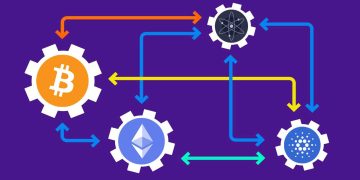
Cross-chain interoperability solutions allow different blockchains to communicate and share information. This can enable the transfer of assets and data between chains, which can improve the overall efficiency of blockchain networks and allow for more seamless scaling.
5. Conclusion: A Path to Scalable Blockchain Networks
The scalability challenges of blockchain technology are substantial, particularly in high-concurrency, large-scale transaction environments. However, as blockchain technology continues to evolve, several promising solutions are being developed to address these issues. Layer 2 solutions, sharding, hybrid consensus mechanisms, and sidechains all offer pathways to scalability while maintaining the core values of decentralization and security.
Despite the challenges, the future of blockchain lies in its ability to scale without sacrificing its foundational principles. As research and development in blockchain scalability continue, we are likely to see more efficient, high-performance networks capable of handling large transaction volumes and delivering fast, secure, and cost-effective solutions for a wide range of applications.
The path forward will require ongoing collaboration across the blockchain community, including developers, researchers, and industry leaders, to refine these solutions and ensure that blockchain technology can meet the demands of tomorrow’s digital economy.