

































1. Introduction: The Growing Need for High-Performance Blockchain Networks
Blockchain technology has seen widespread adoption across various sectors, from financial services and supply chain management to healthcare and government applications. Its decentralized nature ensures data security, transparency, and immutability, making it an attractive choice for digital transactions. However, as blockchain networks scale, issues like performance bottlenecks and limited fault tolerance become more pronounced.
In particular, blockchain networks face challenges in environments characterized by high concurrency and high transaction throughput. Traditional consensus algorithms like Proof of Work (PoW) and Proof of Stake (PoS), while secure, often struggle with processing large numbers of transactions in real-time or maintaining robust fault tolerance as the network size increases.
The need for enhanced performance and fault tolerance is especially critical in applications that demand low-latency processing and seamless user experiences, such as real-time financial transactions, smart city systems, and IoT networks. In this article, we explore how improving performance and fault tolerance in blockchain networks can address these challenges, especially for high-concurrency, high-throughput environments.
2. Blockchain Performance Challenges: Throughput, Latency, and Scalability
2.1 Transaction Throughput and Latency
Transaction throughput refers to the ability of a blockchain to process a large number of transactions per second (TPS). As the volume of transactions increases, the network’s capacity to handle these transactions efficiently becomes a critical concern. Traditional blockchain systems like Bitcoin can process only 7 TPS, while Ethereum handles around 30 TPS. This is significantly lower than traditional financial systems such as Visa, which can process thousands of transactions per second.
Latency, the time it takes for a transaction to be confirmed and added to the blockchain, is another crucial performance metric. High latency can hinder user experience, particularly in applications that require real-time transaction processing. Both throughput and latency issues arise due to the decentralized consensus mechanisms, where multiple nodes must agree on each transaction.
To scale blockchain for high-concurrency environments, improvements in throughput and latency are essential. Without these improvements, blockchain will struggle to meet the demands of high-frequency trading platforms, large-scale enterprise applications, and other industries requiring fast and efficient processing.
2.2 Scalability Issues
Blockchain scalability refers to the ability of the network to handle an increasing number of transactions without sacrificing performance. Scalability problems are primarily due to the limitations of existing consensus mechanisms, such as PoW and PoS, which require each participant to verify and validate every transaction. This results in network congestion, delays, and higher transaction costs during periods of high activity.
Blockchain scalability is essential for the widespread adoption of decentralized applications (dApps) and enterprise solutions. For blockchain to be effective in high-concurrency, high-throughput environments, scalable solutions that can efficiently process large volumes of data are required.

3. Fault Tolerance in Blockchain Networks
Fault tolerance refers to the ability of a system to continue operating correctly even in the presence of failures, such as node crashes, network partitions, or malicious attacks. Blockchain’s decentralized nature provides inherent fault tolerance by design, as it does not rely on a single point of failure. However, maintaining fault tolerance at scale, particularly in large, high-throughput blockchain systems, introduces new complexities.
3.1 Types of Faults in Blockchain Networks
Faults in blockchain networks can be broadly classified into two categories:
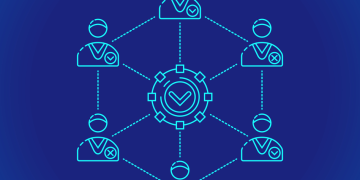
- Byzantine Failures: These occur when nodes in the network behave arbitrarily or maliciously. For instance, a node might send incorrect information or refuse to follow the protocol. Byzantine Fault Tolerance (BFT) mechanisms are designed to ensure that the network reaches consensus despite the presence of faulty or malicious nodes.
- Crash Failures: These happen when nodes stop functioning entirely due to crashes, hardware failures, or network disconnects. While crash failures are easier to handle than Byzantine failures, they still pose challenges when a significant number of nodes go offline simultaneously.
In high-concurrency, high-throughput blockchain environments, it is essential to ensure that the network can tolerate both types of failures without disrupting the entire system. Implementing robust fault tolerance mechanisms is critical for maintaining the availability and reliability of blockchain services.
3.2 Ensuring Fault Tolerance in Large Blockchain Networks
As blockchain networks grow, maintaining fault tolerance becomes increasingly complex. Several strategies can be employed to enhance fault tolerance, including:
- Consensus Algorithm Design: Advanced consensus mechanisms, such as Practical Byzantine Fault Tolerance (PBFT), can handle Byzantine failures more effectively, ensuring that the network can still reach agreement even when some nodes are faulty.
- Redundancy and Replication: Redundancy strategies, like data replication and network partitioning, can improve fault tolerance by ensuring that multiple copies of critical data are stored across different nodes, minimizing the impact of node crashes.
- Smart Contract Monitoring: For systems relying on smart contracts, continuous monitoring can help detect and mitigate failures before they disrupt the blockchain network.
4. Strategies for Enhancing Blockchain Performance and Fault Tolerance
Several approaches can improve blockchain performance and fault tolerance in high-concurrency, high-throughput environments. These strategies range from optimizing existing consensus mechanisms to introducing new technologies designed to enhance scalability and resilience.
4.1 Layer 2 Solutions
Layer 2 solutions, such as the Lightning Network for Bitcoin and Rollups for Ethereum, aim to address scalability issues by offloading some transaction processing off-chain. These solutions enable faster transactions while reducing the burden on the main blockchain. Layer 2 solutions improve both throughput and fault tolerance by providing additional scalability without compromising security.
For example, the Lightning Network uses payment channels to conduct transactions off-chain and only settles final balances on the main Bitcoin blockchain. This reduces congestion and lowers transaction fees, improving overall performance in high-concurrency environments.
4.2 Sharding
Sharding is a technique that divides a blockchain network into smaller partitions, or “shards,” each capable of processing its own transactions. This parallel processing approach significantly improves transaction throughput and reduces latency. Sharding enables blockchain networks to handle a higher volume of transactions by distributing the workload across multiple nodes and groups of validators.
Ethereum 2.0, for example, plans to implement sharding in its transition to a Proof of Stake (PoS) consensus mechanism. Sharding helps maintain fault tolerance by ensuring that if one shard fails or becomes unavailable, other shards can continue to function normally.
4.3 Hybrid Consensus Mechanisms
Hybrid consensus mechanisms combine the benefits of different consensus algorithms to balance performance, fault tolerance, and decentralization. For example, Proof of Authority (PoA) is a consensus mechanism that relies on trusted validators rather than mining or staking. This approach can provide higher throughput and lower latency while maintaining a high level of security.
Additionally, some blockchain networks are exploring hybrid models that integrate Byzantine Fault Tolerance (BFT) with Proof of Stake (PoS) or other algorithms to create more robust systems for high-throughput environments. The combination of these techniques allows for better fault tolerance and scalability while maintaining decentralized control.
4.4 Fault-Tolerant Consensus Algorithms
Fault-tolerant consensus algorithms, such as PBFT and the HoneyBadgerBFT protocol, are designed to ensure the continued operation of a blockchain even when some nodes fail or behave maliciously. These algorithms can tolerate a certain percentage of faulty nodes and still maintain the integrity and consistency of the blockchain.
By improving the efficiency and scalability of BFT-based protocols, blockchain networks can achieve higher fault tolerance in large-scale deployments without sacrificing performance. These consensus mechanisms are particularly well-suited for environments where reliability and availability are crucial, such as in financial systems, supply chain tracking, and IoT networks.
5. Conclusion: Building Blockchain for the Future of High-Concurrency, High-Throughput Environments
As blockchain networks continue to grow in scale and complexity, enhancing their performance and fault tolerance is essential to meeting the demands of high-concurrency, high-throughput environments. Traditional consensus mechanisms, such as Proof of Work and Proof of Stake, face limitations in terms of scalability and fault tolerance when applied to large-scale applications. However, advancements in blockchain technology—ranging from Layer 2 solutions and sharding to hybrid consensus algorithms and fault-tolerant protocols—are paving the way for blockchain systems that can handle the demands of modern applications.
By improving transaction throughput, reducing latency, and increasing resilience against node failures, these innovations can make blockchain technology viable for industries requiring fast, secure, and reliable systems. The future of blockchain lies in its ability to scale effectively while maintaining its decentralized and secure nature, making it an indispensable tool for high-concurrency, high-throughput environments.
As the technology continues to evolve, blockchain will undoubtedly unlock new possibilities for decentralized applications, enabling new levels of performance, reliability, and trust in digital systems.