





























BlockChainIndex.net
  • Home
  • Chain Core
    Cross-Chain Compatibility: Addressing the Challenges and Solutions

    Cross-Chain Compatibility: Addressing the Challenges and Solutions

    The Security Issues of Consensus Mechanisms: An Ongoing Debate

    The Security Issues of Consensus Mechanisms: An Ongoing Debate

    The Lightning Network: The Most Famous Layer 2 Solution on Bitcoin

    The Lightning Network: The Most Famous Layer 2 Solution on Bitcoin

    Consensus Mechanisms of Layer 1 and Layer 2: The Backbone of Blockchain Scalability

    Consensus Mechanisms of Layer 1 and Layer 2: The Backbone of Blockchain Scalability

    Proof of Stake vs Proof of Work

    Proof of Stake vs Proof of Work

    Multi-Consensus Algorithms: Evolving the Future of Blockchain Technology

    Multi-Consensus Algorithms: Evolving the Future of Blockchain Technology

  • Crypto Markets
    Sustainable Yield: Unlocking the Potential for Long-Term Financial Growth

    Sustainable Yield: Unlocking the Potential for Long-Term Financial Growth

    Market Sentiment and Macroeconomic Factors: Interactions and Impacts

    Market Sentiment and Macroeconomic Factors: Interactions and Impacts

    Leveraging On-Chain Data for Real-Time Market Analysis and Intelligence for Investors

    Leveraging On-Chain Data for Real-Time Market Analysis and Intelligence for Investors

    The Stock-to-Flow Model: Analyzing Bitcoin’s Scarcity and Price Predictions

    The Stock-to-Flow Model: Analyzing Bitcoin’s Scarcity and Price Predictions

    Bitcoin Price Volatility and Its Impact on the Entire Market Trend

    Bitcoin Price Volatility and Its Impact on the Entire Market Trend

    The Shifting Dominance of Bitcoin in the Cryptocurrency Market: A Key Indicator for Market Analysis

    The Shifting Dominance of Bitcoin in the Cryptocurrency Market: A Key Indicator for Market Analysis

  • Enterprise Chain
    Electronic Health Records (EHR): Transforming Healthcare for the Future

    Electronic Health Records (EHR): Transforming Healthcare for the Future

    The Integration of Supply Chains and the Internet of Things (IoT)

    The Integration of Supply Chains and the Internet of Things (IoT)

    Supply Chain Financing and Payments

    Supply Chain Financing and Payments

    Optimizing Supply Chain Protocols with Smart Contracts

    Optimizing Supply Chain Protocols with Smart Contracts

    Walmart and IBM’s Food Safety Blockchain Collaboration: Using Blockchain Technology to Track Food Sources and Movement

    Walmart and IBM’s Food Safety Blockchain Collaboration: Using Blockchain Technology to Track Food Sources and Movement

    Global Food Traceability: Ensuring Safety, Transparency, and Sustainability in the Food Supply Chain

    Global Food Traceability: Ensuring Safety, Transparency, and Sustainability in the Food Supply Chain

  • NFT Frontier
    Environmental Concerns in the NFT Industry: Balancing Innovation with Sustainability

    Environmental Concerns in the NFT Industry: Balancing Innovation with Sustainability

    NFT Copyright and Intellectual Property Issues

    NFT Copyright and Intellectual Property Issues

    Decentralization of the Art Market: A New Era of Digital Ownership

    Decentralization of the Art Market: A New Era of Digital Ownership

    NFTs Disrupting the Traditional Art Market

    NFTs Disrupting the Traditional Art Market

    The Explosion of Digital Art and the NFT Market: Revolutionizing the Art World

    The Explosion of Digital Art and the NFT Market: Revolutionizing the Art World

    Emerging Trends in Digital Collectibles: The Future of Ownership in the Digital Age

    Emerging Trends in Digital Collectibles: The Future of Ownership in the Digital Age

  • On-Chain Lens
    Balancing Privacy and Security: A Critical Exploration in the Digital Age

    Balancing Privacy and Security: A Critical Exploration in the Digital Age

    Despite Blockchain Transactions Being Public and Transparent, the Anonymity of Wallets Remains a Challenge

    Despite Blockchain Transactions Being Public and Transparent, the Anonymity of Wallets Remains a Challenge

    Wallet and Smart Contract Interaction: Key Analysis Objects of On-Chain Lens Technology

    Wallet and Smart Contract Interaction: Key Analysis Objects of On-Chain Lens Technology

    On-Chain Lens: Analyzing the Flow of Funds Between Wallets Using Blockchain’s Public Ledger

    On-Chain Lens: Analyzing the Flow of Funds Between Wallets Using Blockchain’s Public Ledger

    Tracking and Analyzing Capital Flows: A Comprehensive Guide to Understanding Financial Movements

    Tracking and Analyzing Capital Flows: A Comprehensive Guide to Understanding Financial Movements

    Wallet Behavior Analysis: The Core of On-Chain Lens Technology

    Wallet Behavior Analysis: The Core of On-Chain Lens Technology

  • Reg Radar
    Building Compliance Frameworks: The Increasing Importance for Crypto Companies in Addressing Regulatory Challenges

    Building Compliance Frameworks: The Increasing Importance for Crypto Companies in Addressing Regulatory Challenges

    Global Consistency and Diversity: Navigating the Balance in a Connected World

    Global Consistency and Diversity: Navigating the Balance in a Connected World

    The European Union’s MiCA Regulation: A New Era for Crypto-Asset Regulation

    The European Union’s MiCA Regulation: A New Era for Crypto-Asset Regulation

    The Evolving Regulatory Landscape: Challenges and Opportunities for Crypto Businesses

    The Evolving Regulatory Landscape: Challenges and Opportunities for Crypto Businesses

    The Evolving Regulatory Frameworks Across Global Regions: Progress and Adjustments in the Face of Emerging Challenges

    The Evolving Regulatory Frameworks Across Global Regions: Progress and Adjustments in the Face of Emerging Challenges

    The U.S. SEC: One of the Most Important Regulatory Bodies for the Crypto Market

    The U.S. SEC: One of the Most Important Regulatory Bodies for the Crypto Market

BlockChainIndex.net
  • Home
  • Chain Core
    Cross-Chain Compatibility: Addressing the Challenges and Solutions

    Cross-Chain Compatibility: Addressing the Challenges and Solutions

    The Security Issues of Consensus Mechanisms: An Ongoing Debate

    The Security Issues of Consensus Mechanisms: An Ongoing Debate

    The Lightning Network: The Most Famous Layer 2 Solution on Bitcoin

    The Lightning Network: The Most Famous Layer 2 Solution on Bitcoin

    Consensus Mechanisms of Layer 1 and Layer 2: The Backbone of Blockchain Scalability

    Consensus Mechanisms of Layer 1 and Layer 2: The Backbone of Blockchain Scalability

    Proof of Stake vs Proof of Work

    Proof of Stake vs Proof of Work

    Multi-Consensus Algorithms: Evolving the Future of Blockchain Technology

    Multi-Consensus Algorithms: Evolving the Future of Blockchain Technology

  • Crypto Markets
    Sustainable Yield: Unlocking the Potential for Long-Term Financial Growth

    Sustainable Yield: Unlocking the Potential for Long-Term Financial Growth

    Market Sentiment and Macroeconomic Factors: Interactions and Impacts

    Market Sentiment and Macroeconomic Factors: Interactions and Impacts

    Leveraging On-Chain Data for Real-Time Market Analysis and Intelligence for Investors

    Leveraging On-Chain Data for Real-Time Market Analysis and Intelligence for Investors

    The Stock-to-Flow Model: Analyzing Bitcoin’s Scarcity and Price Predictions

    The Stock-to-Flow Model: Analyzing Bitcoin’s Scarcity and Price Predictions

    Bitcoin Price Volatility and Its Impact on the Entire Market Trend

    Bitcoin Price Volatility and Its Impact on the Entire Market Trend

    The Shifting Dominance of Bitcoin in the Cryptocurrency Market: A Key Indicator for Market Analysis

    The Shifting Dominance of Bitcoin in the Cryptocurrency Market: A Key Indicator for Market Analysis

  • Enterprise Chain
    Electronic Health Records (EHR): Transforming Healthcare for the Future

    Electronic Health Records (EHR): Transforming Healthcare for the Future

    The Integration of Supply Chains and the Internet of Things (IoT)

    The Integration of Supply Chains and the Internet of Things (IoT)

    Supply Chain Financing and Payments

    Supply Chain Financing and Payments

    Optimizing Supply Chain Protocols with Smart Contracts

    Optimizing Supply Chain Protocols with Smart Contracts

    Walmart and IBM’s Food Safety Blockchain Collaboration: Using Blockchain Technology to Track Food Sources and Movement

    Walmart and IBM’s Food Safety Blockchain Collaboration: Using Blockchain Technology to Track Food Sources and Movement

    Global Food Traceability: Ensuring Safety, Transparency, and Sustainability in the Food Supply Chain

    Global Food Traceability: Ensuring Safety, Transparency, and Sustainability in the Food Supply Chain

  • NFT Frontier
    Environmental Concerns in the NFT Industry: Balancing Innovation with Sustainability

    Environmental Concerns in the NFT Industry: Balancing Innovation with Sustainability

    NFT Copyright and Intellectual Property Issues

    NFT Copyright and Intellectual Property Issues

    Decentralization of the Art Market: A New Era of Digital Ownership

    Decentralization of the Art Market: A New Era of Digital Ownership

    NFTs Disrupting the Traditional Art Market

    NFTs Disrupting the Traditional Art Market

    The Explosion of Digital Art and the NFT Market: Revolutionizing the Art World

    The Explosion of Digital Art and the NFT Market: Revolutionizing the Art World

    Emerging Trends in Digital Collectibles: The Future of Ownership in the Digital Age

    Emerging Trends in Digital Collectibles: The Future of Ownership in the Digital Age

  • On-Chain Lens
    Balancing Privacy and Security: A Critical Exploration in the Digital Age

    Balancing Privacy and Security: A Critical Exploration in the Digital Age

    Despite Blockchain Transactions Being Public and Transparent, the Anonymity of Wallets Remains a Challenge

    Despite Blockchain Transactions Being Public and Transparent, the Anonymity of Wallets Remains a Challenge

    Wallet and Smart Contract Interaction: Key Analysis Objects of On-Chain Lens Technology

    Wallet and Smart Contract Interaction: Key Analysis Objects of On-Chain Lens Technology

    On-Chain Lens: Analyzing the Flow of Funds Between Wallets Using Blockchain’s Public Ledger

    On-Chain Lens: Analyzing the Flow of Funds Between Wallets Using Blockchain’s Public Ledger

    Tracking and Analyzing Capital Flows: A Comprehensive Guide to Understanding Financial Movements

    Tracking and Analyzing Capital Flows: A Comprehensive Guide to Understanding Financial Movements

    Wallet Behavior Analysis: The Core of On-Chain Lens Technology

    Wallet Behavior Analysis: The Core of On-Chain Lens Technology

  • Reg Radar
    Building Compliance Frameworks: The Increasing Importance for Crypto Companies in Addressing Regulatory Challenges

    Building Compliance Frameworks: The Increasing Importance for Crypto Companies in Addressing Regulatory Challenges

    Global Consistency and Diversity: Navigating the Balance in a Connected World

    Global Consistency and Diversity: Navigating the Balance in a Connected World

    The European Union’s MiCA Regulation: A New Era for Crypto-Asset Regulation

    The European Union’s MiCA Regulation: A New Era for Crypto-Asset Regulation

    The Evolving Regulatory Landscape: Challenges and Opportunities for Crypto Businesses

    The Evolving Regulatory Landscape: Challenges and Opportunities for Crypto Businesses

    The Evolving Regulatory Frameworks Across Global Regions: Progress and Adjustments in the Face of Emerging Challenges

    The Evolving Regulatory Frameworks Across Global Regions: Progress and Adjustments in the Face of Emerging Challenges

    The U.S. SEC: One of the Most Important Regulatory Bodies for the Crypto Market

    The U.S. SEC: One of the Most Important Regulatory Bodies for the Crypto Market

BlockChainIndex.net
No Result
View All Result
Home Chain Core

Chain Core: One of the Core Platforms Driving DeFi Protocols

September 22, 2025
in Chain Core
Chain Core: One of the Core Platforms Driving DeFi Protocols

Introduction

The rise of Decentralized Finance (DeFi) has been one of the most transformative developments in the blockchain ecosystem. DeFi represents a broad range of financial applications built on blockchain technology that aim to eliminate intermediaries, reduce costs, and offer more transparent and accessible financial services to users globally. However, while DeFi has the potential to revolutionize the financial sector, the success of DeFi protocols is highly dependent on the underlying blockchain infrastructure.

Chain Core, as a cutting-edge blockchain platform, is increasingly seen as one of the key enablers of DeFi protocols. With its advanced features in scalability, speed, security, and interoperability, Chain Core provides the backbone necessary for DeFi platforms to operate seamlessly. This article explores how Chain Core facilitates the development and operation of DeFi protocols, highlighting its features, advantages, and the role it plays in driving the decentralized finance revolution.


1. What is DeFi?

1.1 Definition and Significance

DeFi refers to a collection of financial services, including lending, borrowing, trading, and investing, that are built on blockchain technology without the need for traditional intermediaries such as banks, brokers, or insurance companies. These services are often powered by smart contracts, which automatically execute transactions when predefined conditions are met.

DeFi has grown rapidly in the past few years, with billions of dollars locked in DeFi protocols. The core principles of DeFi include:

  • Decentralization: Financial transactions occur directly between users, eliminating intermediaries.
  • Openness and Transparency: Anyone can access DeFi protocols, and all transactions are transparent and verifiable on the blockchain.
  • Programmability: Financial services are programmable through smart contracts, enabling more customizable and automated financial products.
  • Security: Blockchain ensures that data is secure and immutable, providing trust without relying on central authorities.

While DeFi offers numerous advantages, it also faces challenges, including scalability, interoperability, high transaction fees, and security concerns. Chain Core, with its unique features, addresses many of these challenges, making it a critical platform for the DeFi ecosystem.


2. Chain Core: A Blockchain Infrastructure for DeFi

2.1 What is Chain Core?

Chain Core is a high-performance blockchain platform designed to support decentralized applications (dApps) and smart contracts. It provides a robust and secure infrastructure that enables developers to build scalable, interoperable, and secure applications for a variety of industries, including DeFi.

Chain Core is known for its scalability, low transaction fees, and high throughput, making it an ideal platform for powering DeFi protocols. By supporting fast and secure transactions, Chain Core addresses one of the primary challenges faced by DeFi projects: ensuring that financial applications can scale to meet the demands of a growing user base.


2.2 Key Features of Chain Core that Benefit DeFi

2.2.1 High Throughput and Low Latency

One of the main challenges for DeFi platforms is handling the high volume of transactions that are often required in financial applications. Chain Core uses a highly efficient consensus mechanism that allows for high throughput and low-latency transactions. This is crucial for DeFi protocols that require real-time transaction finality for actions like trading, lending, and borrowing.

By ensuring that transactions are processed quickly, Chain Core enables DeFi protocols to operate seamlessly even under heavy traffic, providing users with a smooth and responsive experience.

2.2.2 Scalability

DeFi platforms need to scale rapidly as they grow in popularity. Chain Core addresses this challenge by offering scalable architecture that can handle increasing numbers of users and transactions. It uses advanced sharding and layer-2 solutions to ensure that the blockchain can accommodate a large volume of transactions without compromising on speed or security.

DeFi protocols, especially those that offer financial services like lending and decentralized exchanges (DEXs), rely heavily on scalability to handle high transaction volumes. Chain Core’s ability to scale ensures that DeFi applications can continue to operate efficiently as their user base grows.

2.2.3 Interoperability

For DeFi to reach its full potential, interoperability between different blockchain platforms is essential. DeFi protocols often need to interact with other blockchains to access liquidity, assets, or services. Chain Core supports cross-chain interoperability, allowing DeFi applications to seamlessly communicate with other blockchains.

This interoperability enables DeFi projects to access a wider range of assets and services, fostering greater collaboration and innovation within the decentralized finance ecosystem.

2.2.4 Security and Privacy

Security is a top concern for any financial application, and DeFi is no exception. With the increasing number of smart contract exploits and hacks in the DeFi space, ensuring the security of decentralized protocols is critical. Chain Core integrates robust security features such as cryptographic encryption and consensus-based validation to ensure that transactions are secure and tamper-proof.

Furthermore, Chain Core supports privacy-preserving technologies, such as zero-knowledge proofs (ZKPs), to protect users’ sensitive financial data while allowing transactions to be verified.
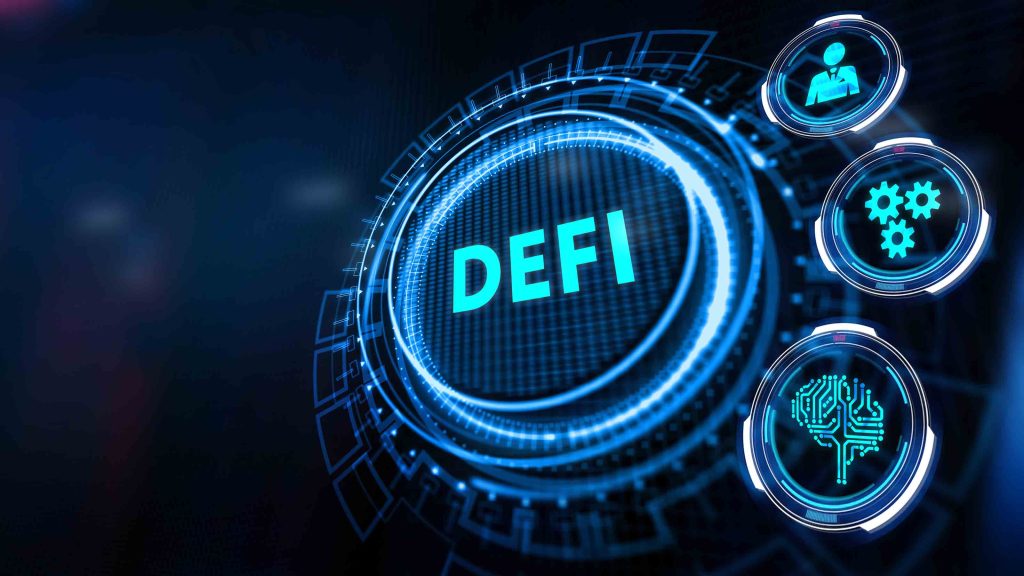
DeFi -Decentralized Finance on dark blue abstract polygonal background. Concept of blockchain, decentralized financial system.

3. The Role of Chain Core in DeFi Protocols

3.1 Enabling Decentralized Exchanges (DEXs)

Decentralized exchanges (DEXs) are a cornerstone of the DeFi ecosystem, allowing users to trade digital assets without relying on centralized authorities. Chain Core’s high throughput and scalability are crucial for ensuring that DEXs can handle the volume of trades and provide fast transaction finality.

Through Chain Core, DEXs can offer:

  • Instant settlement of trades
  • Low fees for transactions
  • Secure and transparent trading on the blockchain

The scalability and interoperability of Chain Core also enable DEXs to integrate with other DeFi services, enhancing liquidity and broadening the range of assets available for trading.

3.2 Powering DeFi Lending and Borrowing Platforms

Lending and borrowing protocols are another key component of the DeFi space. Platforms like Aave and Compound rely on blockchain technology to enable users to lend their assets in exchange for interest or to borrow funds by collateralizing their assets.

Chain Core supports smart contract functionality, which automates the process of lending and borrowing, making it possible for users to earn interest or access funds without intermediaries. By using Chain Core’s infrastructure, these platforms can offer:

  • Fast and secure lending/borrowing processes
  • Transparent and immutable records of transactions
  • Lower operational costs due to the elimination of intermediaries

3.3 Enhancing Derivatives and Synthetic Assets

DeFi platforms also offer derivatives and synthetic assets that track the value of real-world assets, such as commodities, stocks, and cryptocurrencies. Chain Core’s advanced infrastructure allows these platforms to offer secure, efficient, and scalable solutions for the creation and trading of synthetic assets.

Through its high throughput and low-latency transaction processing, Chain Core ensures that synthetic asset platforms can handle large volumes of trades and provide real-time price feeds, which are crucial for the proper functioning of these platforms.


4. Chain Core’s Contribution to DeFi’s Future

4.1 Lower Transaction Costs

Transaction fees are a significant concern in the DeFi space, especially on high-traffic networks like Ethereum. As DeFi protocols scale, transaction costs can become prohibitively expensive for users. Chain Core addresses this by offering low transaction fees, making it an attractive alternative for DeFi projects looking to provide affordable services to their users.

By reducing fees, Chain Core helps DeFi protocols remain accessible to a larger audience and ensures that users can engage in DeFi applications without facing excessive costs.

4.2 Enhancing Developer Experience

Chain Core provides developers with the tools and infrastructure they need to build scalable and secure DeFi protocols. Its comprehensive developer suite includes everything from smart contract frameworks to dApp integration tools, enabling rapid development and deployment of DeFi applications.

This developer-friendly environment makes it easier for projects to launch and scale their DeFi protocols, fostering innovation within the space.

4.3 Supporting Future DeFi Innovations

As DeFi continues to evolve, new innovations will emerge in areas such as DeFi insurance, tokenized assets, and decentralized autonomous organizations (DAOs). Chain Core’s flexible and scalable infrastructure ensures that it can support the next generation of DeFi applications.

By providing interoperability with other blockchain ecosystems, Chain Core also helps facilitate cross-chain collaboration, enabling DeFi platforms to access new markets and expand their user base.


5. Conclusion

Chain Core stands out as one of the most powerful and versatile blockchain platforms for supporting DeFi protocols. Its scalability, low transaction fees, high throughput, and focus on security and interoperability make it an ideal infrastructure for decentralized finance.

As DeFi continues to grow and reshape the financial landscape, Chain Core will play a pivotal role in supporting and enabling DeFi protocols to operate efficiently, securely, and at scale. Whether powering decentralized exchanges, lending platforms, or synthetic asset protocols, Chain Core’s robust features position it as a cornerstone of the decentralized finance revolution.

Tags: BlockchainChain coreDeFi
ShareTweetShare

Related Posts

Cross-Chain Compatibility: Addressing the Challenges and Solutions
Chain Core

Cross-Chain Compatibility: Addressing the Challenges and Solutions

December 1, 2025
The Security Issues of Consensus Mechanisms: An Ongoing Debate
Chain Core

The Security Issues of Consensus Mechanisms: An Ongoing Debate

November 30, 2025
The Lightning Network: The Most Famous Layer 2 Solution on Bitcoin
Chain Core

The Lightning Network: The Most Famous Layer 2 Solution on Bitcoin

November 29, 2025
Consensus Mechanisms of Layer 1 and Layer 2: The Backbone of Blockchain Scalability
Chain Core

Consensus Mechanisms of Layer 1 and Layer 2: The Backbone of Blockchain Scalability

November 28, 2025
Proof of Stake vs Proof of Work
Chain Core

Proof of Stake vs Proof of Work

November 27, 2025
Multi-Consensus Algorithms: Evolving the Future of Blockchain Technology
Chain Core

Multi-Consensus Algorithms: Evolving the Future of Blockchain Technology

November 26, 2025
Leave Comment
  • Trending
  • Comments
  • Latest
Combining Virtual Reality in the Metaverse with NFTs: Creating Richer Digital Experiences and Business Models

Combining Virtual Reality in the Metaverse with NFTs: Creating Richer Digital Experiences and Business Models

October 21, 2025
Leveraging Limited Edition NFT Merchandise to Attract Young Consumers, Enhance Brand Uniqueness, and Build Loyalty

Leveraging Limited Edition NFT Merchandise to Attract Young Consumers, Enhance Brand Uniqueness, and Build Loyalty

October 21, 2025
The Explosive Growth of the NFT Art Market: Scale, Activity, and Future Prospects

The Explosive Growth of the NFT Art Market: Scale, Activity, and Future Prospects

October 21, 2025
Brands and the Future of Commerce: Selling Virtual Goods through NFTs Tied to Physical Products

Brands and the Future of Commerce: Selling Virtual Goods through NFTs Tied to Physical Products

October 21, 2025
The Future Development Trend of Bitcoin

The Future Development Trend of Bitcoin

The Rise of Layer 2 Technology: Scaling Ethereum with Solutions like Optimism and Arbitrum

The Rise of Layer 2 Technology: Scaling Ethereum with Solutions like Optimism and Arbitrum

How Businesses Can Enhance Supply Chain Flexibility and Resilience Through Diversified Sourcing, Localized Production, and Risk Management Frameworks to Face Future Global Crises or Geopolitical Risks

How Businesses Can Enhance Supply Chain Flexibility and Resilience Through Diversified Sourcing, Localized Production, and Risk Management Frameworks to Face Future Global Crises or Geopolitical Risks

The Role of Blockchain in the Metaverse: New Infrastructure for the Virtual World

The Role of Blockchain in the Metaverse: New Infrastructure for the Virtual World

Environmental Concerns in the NFT Industry: Balancing Innovation with Sustainability

Environmental Concerns in the NFT Industry: Balancing Innovation with Sustainability

December 1, 2025
Electronic Health Records (EHR): Transforming Healthcare for the Future

Electronic Health Records (EHR): Transforming Healthcare for the Future

December 1, 2025
Sustainable Yield: Unlocking the Potential for Long-Term Financial Growth

Sustainable Yield: Unlocking the Potential for Long-Term Financial Growth

December 1, 2025
Cross-Chain Compatibility: Addressing the Challenges and Solutions

Cross-Chain Compatibility: Addressing the Challenges and Solutions

December 1, 2025
BlockChainIndex.net

From Layer2 technical deep dives to NFT market forecasting, we curate professional perspectives through on-chain analytics and industry expert collaborations. Stay ahead in blockchain innovation.

© 2025 blockchainindex.com. contacts:[email protected]

No Result
View All Result
  • Home
  • Chain Core
  • Crypto Markets
  • Enterprise Chain
  • NFT Frontier
  • On-Chain Lens
  • Reg Radar

© 2025 blockchainindex.com. contacts:[email protected]

Welcome Back!

Login to your account below

Forgotten Password?

Retrieve your password

Please enter your username or email address to reset your password.

Log In