


















Introduction
Non-Fungible Tokens (NFTs) have revolutionized the world of digital ownership, offering artists, creators, and businesses a new way to buy, sell, and trade digital assets. NFTs are unique digital representations of assets, typically powered by blockchain technology, that can be linked to various types of digital files, such as art, music, videos, and virtual real estate.
However, as the popularity of NFTs grows, so too do the legal complexities surrounding their use—particularly in the areas of copyright and intellectual property (IP). One of the most contentious issues in the NFT space is the question of who truly owns the rights to the underlying digital content associated with an NFT. Is it the creator who minted the NFT? The person who purchased it? Or perhaps someone else entirely?
This article will explore the intersection of NFTs, copyright, and intellectual property law, highlighting key challenges, real-world legal cases, and potential solutions for protecting digital assets in the world of NFTs. We will examine the distinction between ownership of the token and ownership of the underlying content, the challenges in enforcing IP rights in the digital world, and the need for clearer legal frameworks.
What Are NFTs?
Before diving into the intellectual property implications of NFTs, it’s important to understand what NFTs are and how they function within the digital ecosystem.
An NFT is a type of digital asset that is recorded on a blockchain, most commonly on the Ethereum blockchain, although other blockchains like Solana and Flow also support NFTs. Each NFT is unique and cannot be replicated or exchanged on a one-to-one basis with other tokens. This uniqueness, coupled with the immutability of blockchain technology, makes NFTs particularly attractive for representing ownership of digital goods and assets.
NFTs are most commonly associated with digital art, but they can also represent other forms of media, such as music, videos, virtual land, and in-game assets. The ownership of the NFT is recorded on the blockchain, allowing for a transparent and verifiable record of who owns the token at any given time.
While the NFT itself is unique, the content to which it is tied (such as a piece of artwork) may not necessarily be unique. This raises important questions about what NFT ownership actually entails and whether owning the NFT equates to owning the intellectual property rights associated with the underlying content.
Copyright and Intellectual Property in the NFT Context
The central issue in the debate over NFTs and intellectual property rights revolves around the question of what rights an NFT owner actually acquires when purchasing an NFT. There is a common misconception that purchasing an NFT grants the buyer full ownership of the associated digital content. In reality, owning an NFT typically only means that the buyer holds the digital token itself and not necessarily the rights to the underlying content.
1. The Ownership of the NFT vs. the Copyright of the Underlying Content
When someone buys an NFT, they are typically purchasing a digital token that references a specific digital file, such as a piece of art, music, or video. However, the copyright to the underlying content remains separate from the ownership of the NFT.
In traditional art sales, when someone buys a painting, they own the physical artwork but not necessarily the rights to reproduce, distribute, or modify it. The same logic applies to NFTs—owning an NFT does not automatically grant the buyer the rights to the underlying digital asset. Instead, the creator or original owner of the content typically retains the copyright, unless explicitly stated otherwise in the terms of the sale.
To clarify, copyright gives the creator or owner of a work the exclusive right to reproduce, distribute, perform, and create derivative works based on the original work. For most NFTs, the ownership of the NFT does not convey these rights, and the NFT holder does not have the right to use the content in any commercial manner unless specifically authorized by the content owner.
2. Smart Contracts and Licensing Terms
Smart contracts play a significant role in the way NFTs are bought and sold. These self-executing contracts run on blockchain networks and define the terms of the transaction between the buyer and the seller. In the context of NFTs, smart contracts may include licensing terms or restrictions on how the underlying content can be used.
For instance, some NFT creators may choose to include specific license agreements within the smart contract. These terms could specify whether the buyer is allowed to use the digital content for commercial purposes, whether they can reproduce the work, or if they are granted rights to display the content in certain contexts (e.g., in virtual galleries or digital environments).
The license associated with an NFT can vary significantly depending on the terms set by the creator. In many cases, NFT buyers may be granted limited usage rights that are non-transferable and non-exclusive, meaning that they cannot resell or commercially exploit the underlying content.
3. The Need for Clear Licensing Frameworks
Because of the complexities surrounding the transfer of intellectual property rights in the NFT space, there is a growing call for clearer and more standardized licensing frameworks. Creators, buyers, and platforms alike would benefit from a more defined system that outlines the rights and restrictions associated with each NFT. This would provide greater legal clarity and reduce the likelihood of disputes over ownership and usage rights.
Some platforms are already beginning to include standardized licensing terms in the NFT metadata or within the smart contracts themselves, but these efforts are still in the early stages. As the NFT market matures, clearer standards for NFT copyright and licensing agreements may emerge, creating more consistency and legal certainty.
Real-World Legal Challenges in NFT Copyright
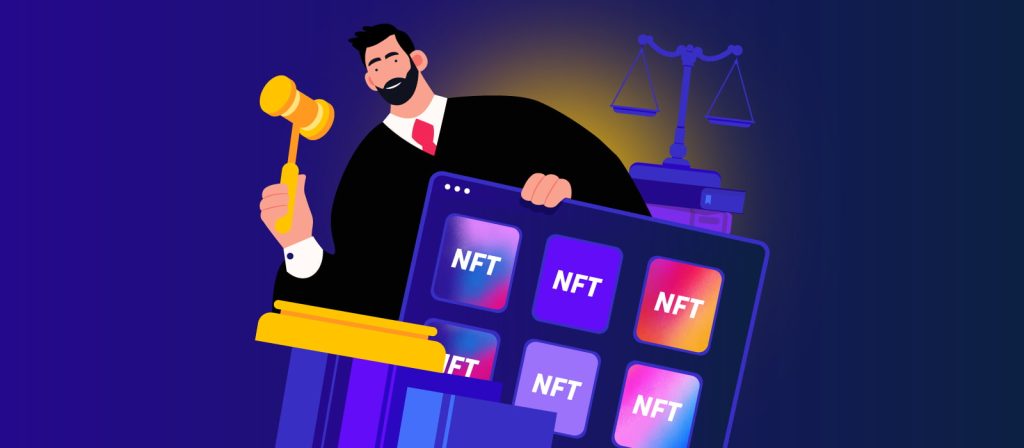
Several real-world cases have highlighted the legal challenges of NFTs and intellectual property. As the NFT market continues to grow, the potential for legal disputes increases. Below are some of the most common legal issues that have arisen:
1. NFT Art Theft and Copyright Infringement
One of the most well-known legal challenges in the NFT space is the unauthorized minting and sale of stolen or plagiarized art. Since NFTs are minted and sold on decentralized platforms, it is relatively easy for bad actors to take someone else’s artwork, mint it as an NFT, and sell it without the original creator’s permission.
In some cases, artists have discovered that their artwork has been copied and sold as an NFT without their consent. This has raised questions about how to enforce copyright and combat infringement in the NFT space. While artists can file a Digital Millennium Copyright Act (DMCA) takedown notice with NFT marketplaces, enforcement can be complicated due to the decentralized nature of these platforms and the anonymity of many users.
2. Plagiarism and Fake NFTs
Another legal issue is the creation and sale of fake NFTs. In some instances, individuals have minted NFTs that falsely claim to represent original works by famous artists or celebrities. This type of fraudulent activity can confuse buyers and damage the reputation of legitimate NFT creators. While marketplaces like OpenSea and Rarible have implemented various verification systems to reduce the risk of fraud, this remains a significant issue.
To combat plagiarism and fraud, NFT platforms have been working with creators and copyright holders to establish better verification and authentication processes. However, as the NFT space continues to grow, there is a need for more robust legal and technological safeguards.
3. The Impact of Copyright Laws Across Jurisdictions
Another challenge in the NFT space is the global nature of NFTs and the differences in copyright laws across jurisdictions. While some countries have well-established frameworks for protecting intellectual property, others may have less comprehensive laws or may not recognize certain aspects of digital copyright.
For example, a work that is protected by copyright in one country may not have the same legal status in another. This discrepancy can create complications when it comes to enforcing rights and resolving disputes related to NFTs. International cooperation and harmonization of copyright laws will be essential for addressing these challenges and ensuring that creators and buyers have the legal protections they need.
Potential Solutions and the Future of NFT Copyright Law
To address the growing legal challenges associated with NFTs and intellectual property, several potential solutions are being explored:
1. Standardized Licensing Models
As mentioned earlier, creating standardized licensing models for NFTs could help clarify the rights and restrictions associated with digital content. By establishing clear guidelines for what an NFT purchase entails, including whether or not the buyer has commercial rights or can transfer the content, creators and buyers alike would have a clearer understanding of their legal standing.
2. Blockchain-Based Copyright Registries
Another promising solution is the development of blockchain-based copyright registries that enable creators to register their works and establish ownership on the blockchain. This would create an immutable record of copyright ownership and could be used to verify the legitimacy of NFTs and prevent unauthorized minting of digital assets.
3. Regulatory and Legal Reform
Governments and regulatory bodies around the world are beginning to explore how existing copyright laws apply to NFTs and what new regulations might be needed. As the NFT market matures, it is likely that lawmakers will introduce more comprehensive laws that specifically address the unique challenges of digital ownership, copyright, and intellectual property in the blockchain space.
Conclusion
The intersection of NFTs, copyright, and intellectual property presents a complex set of legal challenges. While NFTs provide a novel way to represent ownership of digital assets, they also raise important questions about the nature of digital ownership, the transfer of rights, and the protection of creators’ intellectual property.
As the NFT market continues to evolve, it is essential that clearer licensing frameworks, stronger copyright enforcement mechanisms, and international cooperation are developed to ensure that creators’ rights are protected, buyers are well-informed, and the NFT space can grow in a legal and sustainable manner. Only then can NFTs realize their full potential as a tool for digital ownership and innovation.